Key Takeaways
- Alcohol detox usually takes five to ten days, and it can be dangerous without medical supervision.
- When choosing a rehab center, look at accreditation, medical staff qualifications, and the quality of ongoing addiction treatment—not just the website promises.
- Drug and alcohol treatment programs that offer round-the-clock medical detox and holistic approaches, like Wish Recovery's luxury rehab in Los Angeles, provide comfortable, private settings designed for healing.
- Detox alone? Most people relapse. The real difference comes from how you move into residential treatment and keep that support going.
If you're weighing options right now, call Wish Recovery's admissions team anytime—24/7, confidential, no pressure. No pressure. No obligation. Just clarity. Contact us today.
What Happens to Your Body During Alcohol Detox
Alcohol detox is the medically supervised process of removing alcohol from your system while your brain and body adjust after extended use.
When you've been drinking heavily for weeks, months, or years, your nervous system adapts. It recalibrates around alcohol's constant presence. GABA receptors—the brain's calming system—get dialed down. Glutamate pathways—the accelerator pedal—get cranked up. Your body builds a new equilibrium, one that depends on alcohol to feel balanced.
Then you stop.
And everything that was suppressed comes roaring back. Your nervous system, suddenly without the substance it organized itself around, overreacts. Withdrawal symptoms can range from uncomfortable (sweating, shaking, nausea) to life-threatening (seizures, delirium tremens, cardiovascular collapse) (Kouimtsidis et al., 2019)
Understanding the medical detox process—how long it takes, what symptoms look like, and why medically supervised detox matters—is the first step in making an informed choice about the level of care you or someone you love actually needs. Drug or alcohol addiction follows similar patterns, though alcohol withdrawal carries unique medical risks.
How Long Does Alcohol Detox take?
Everyone's detox timeline looks different.
For most people, withdrawal symptoms start showing up 6 to 24 hours after the last drink. Symptoms usually peak within one to three days, then start to ease over the next week (Rens et al., 2024).
When medication is dosed to match your symptoms rather than following a preset schedule, some people finish detox in two days. Home-based detox programs, when they're medically appropriate, usually run five to seven days (Murdoch & Marsden, 2014; Rens et al., 2024). Drug detox programs follow similar timelines, though specific substances bring different withdrawal patterns.
How long your detox takes depends on a few things: how much you've been drinking, if you've gone through withdrawal before, and whatever else is going on with your health. Anxiety and insomnia can stick around for weeks even after the worst has passed.
The detox process has a rhythm. Knowing what to expect doesn't make it easy. But it does make it less frightening.
What Does Alcohol Withdrawal Feel Like?
Early withdrawal often starts with tremors, anxiety, sweating, and insomnia. Take away the alcohol, and your nervous system just panics.
As withdrawal intensifies, some people experience auditory or visual hallucinations, seizures, and dangerous swings in blood pressure and heart rate (Day & Daly, 2021). About 10% of people with symptomatic withdrawal develop seizures. Around 5% of hospitalized patients develop delirium tremens—a medical emergency with a mortality rate near 15% if untreated (Nicholas et al., 2013; Lacerda et al., 2021).
There's also a process called kindling. Previous withdrawal episodes can make future ones worse. Repeated detox attempts without proper medical care increase both cognitive and physical harm over time (Kouimtsidis et al., 2019).
The severity of your withdrawal isn't determined by willpower. It's medical.
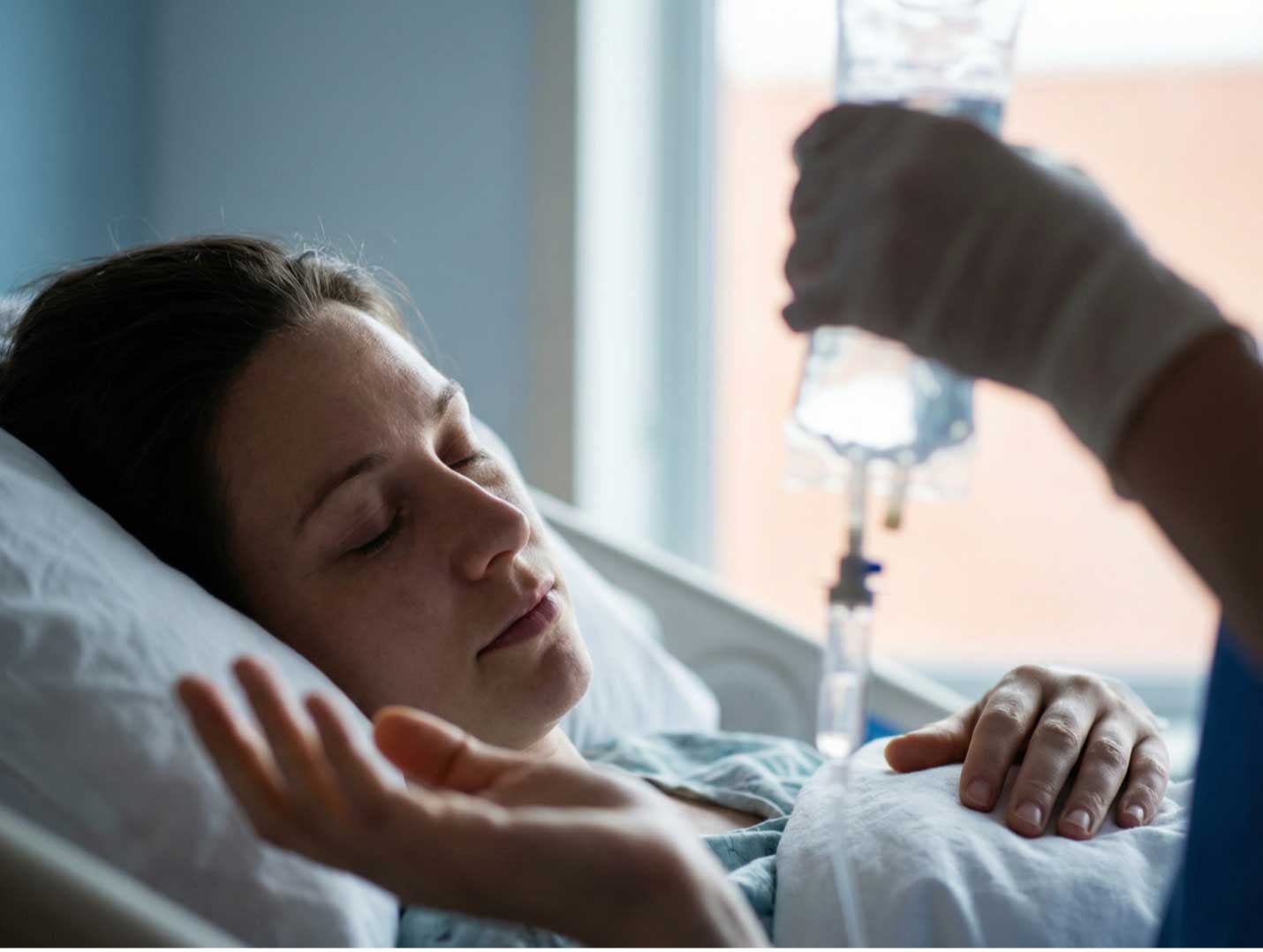
Can I Detox from Alcohol at Home, or Do I Need Medical Care?
Unsupervised alcohol withdrawal can kill.
Seizures, delirium tremens, and death follow a documented progression. The risk climbs with every previous withdrawal episode and any underlying health conditions (Ferreira et al., 2016; Rens et al., 2024).
Medical detox uses medications (usually benzodiazepines and anticonvulsants), IV fluids, and continuous monitoring to manage that risk. Staff also give thiamine supplements to prevent Wernicke's encephalopathy, a neurological emergency caused by prolonged alcohol use (Quelch et al., 2025).
When medication is dosed based on symptoms rather than a fixed schedule, hospital stays and total medication drop by about 60%—without compromising safety (Murdoch & Marsden, 2014). The approach works because it treats what's happening in your body, not what a protocol assumes.
Medical detox creates the safest passage between active drug or alcohol dependence and the addiction treatment that follows. This foundation matters whether you're dealing with alcohol and drug addiction together or a single substance use disorder.
How to Choose an Alcohol Detox Center Near You
"Alcohol detoxification near me" or "rehab near me" yields a flood of listings. Each one promises empathetic care, proven methods, and a new beginning.
The gap between what treatment centers promise and what they deliver is wide. Your job is to close it through careful questions.
Studies show that the rehab center you select impacts everything—from how safely you move through withdrawal to your ability to maintain sobriety in the addiction treatment programs that follow (MacKinnon et al., 2022). Knowing what to look for can help you cut through the noise.
What Does Accreditation Tell You About a Rehab Center?
Accreditation from organizations like the Joint Commission or CARF means a drug and alcohol treatment center meets recognized care standards.
Research shows people are much more likely to successfully transition from detox to ongoing addiction treatment when the rehab facility has a high level of accreditation (MacKinnon et al., 2022).
In California, state licensing through the Department of Health Care Services is the baseline requirement for any drug and alcohol rehab program. LegitScript certification and NAATP membership? Those add another layer of verification.
Why do these credentials matter? Because not every rehab near you runs the same way. Quality swings wildly across treatment facilities, and accreditation shows you which drug rehabilitation centers actually hit recognized benchmarks (MacKinnon et al., 2022).
What Should I Ask Before Trusting a Detox Program with My Recovery?
Start with the basics: staff-to-client ratio and the credentials of the medical team—doctors, nurses, and addiction specialists.
Find out what happens after detox. Does the rehab program move you into residential treatment? Partial hospitalization? An intensive outpatient program?
Smaller treatment centers tend to do better at connecting patients with ongoing care after detox. When every treatment plan is tailored to you specifically—a truly personalized treatment approach—engagement goes up (MacKinnon et al., 2022; Holt et al., 2017).
Ask about discharge planning. People with timely follow-up to community substance use treatment within 7 to 14 days after detox have measurably better outcomes.
A drug and alcohol treatment program that can't clearly explain what comes after the detox phase is telling you something about its treatment philosophy.
Do I Need Inpatient Detox, or Could an Outpatient Program Work?
The answer depends on your medical history and withdrawal risk.
Inpatient drug and alcohol rehab programs provide 24-hour supervision and are recommended for people at risk of severe withdrawal, those with co-occurring psychiatric conditions, or anyone without a stable home environment (Agyapong et al., 2007).
Outpatient rehab can work for individuals with mild to moderate alcohol withdrawal symptoms, strong social support, and no history of complicated detox episodes. One study found comparable sobriety rates at six months between inpatient treatment programs and outpatient settings, though outpatient programs showed only a 53% completion rate (Agyapong et al., 2007; Stephens et al., 2014).
Outpatient care costs less. But completion rates and safety need to guide the decision about the right level of care.
Wondering if your insurance covers inpatient or outpatient alcohol detox? Wish Recovery accepts most PPO plans and offers confidential verification in minutes. Check your coverage here.
What If Alcohol Use Is Connected to Depression or Anxiety?
This question gets asked quietly, if it gets asked at all.
Drug addiction and alcohol addiction rarely exist in isolation. Depression, anxiety, PTSD, and personality disorders frequently co-occur with drug or alcohol use disorder, and the relationship runs both ways. The prevalence of co-occurring substance use and psychiatric disorders has been rising for over a decade (Crome & Myton, 2004).
Anxiety and depressive symptoms can be both a cause and a consequence of heavy use of alcohol or drugs. It's often hard to tell which came first until you've been sober long enough for the withdrawal fog to lift (Crome & Myton, 2004).
Alcohol and drug treatment programs that treat only the substance use—and ignore mental health—see higher relapse rates. Dual diagnosis care starts with a psychiatric assessment so clinicians can address the depression or anxiety at the same time they're managing withdrawal. This matters whether one is struggling with alcohol alone or combined alcohol and substance abuse.
Psychosocial factors like unemployment and co-occurring anxiety also link to more severe alcohol withdrawal symptoms. This complexity is why clinical teams skilled in both addiction medicine and psychiatric care matter so much (Hughes, 2011).
Wish Recovery's dual diagnosis model pairs medical detox with psychiatric evaluation right from the start. Your treatment plan considers the whole picture—substance use and mental health treatment together, not one or the other in isolation.
If you're dealing with both alcohol dependence and a mental health condition, Wish Recovery's clinical team specializes in dual diagnosis care. Contact us for a confidential assessment.

Does The Detox Environment Affect Long-Term Recovery?
Yes. And the evidence is stronger than most people expect.
Research on treatment and recovery identifies the patient's environment—both living situation and treatment setting—as a critical factor in whether someone completes detox and engages with ongoing addiction recovery (Timko et al., 2016).
High-risk living environments saturated with substance use cues and lacking social support represent one of the biggest barriers to post-detox treatment engagement. A structured, supportive environment during withdrawal is a clinical variable, not a luxury.
How does environment affect detox and withdrawal outcomes?
Program-level practices shape outcomes as much as pharmacology.
Discharge planning, patient education, and rapport building within detox programs are key facilitators of successful transitions to ongoing drug and alcohol rehab (Timko et al., 2016).
Integrated rehab programs where detox and treatment function as a single continuum—rather than separate episodes—eliminate the environmental disruption that causes so many people to fall through the gap between levels of care.
Evidence-based practices, patient-centered care, care coordination, and well-trained staff directly influence whether someone moves from detox into the recovery journey or back into the cycle (Timko et al., 2016).
The treatment environment tells your nervous system whether it's safe to do the hard work.
What does alcohol detox look like at Wish Recovery in Los Angeles?
Wish Recovery operates as a boutique rehabilitation center on a private estate in Los Angeles. Groups are limited to 12 clients at a time.
IV detox protocols and round-the-clock medical monitoring handle the clinical side. Private suites, chef-prepared meals designed for recovery, and holistic rehab services (yoga, meditation, breathwork, acupuncture) help your nervous system reset.
The small-group setting means more staff per client and an individualized treatment plan that adjusts as you move through detox. Many of the clinical staff have personal recovery experience, which adds a layer of understanding credentials can't teach.
The estate includes a pool, sauna, gym, and steam room—tools for a body learning to recalibrate without alcohol, not indulgences.
Is a luxury alcohol detox program the right fit for someone like me?
Luxury alcohol detox in Los Angeles is designed for people who need medical supervision during withdrawal but are put off by traditional clinical settings.
These environments can feel triggering, impersonal, or remind you of past rehab attempts that didn't work. This approach fits professionals who value privacy, individuals with complex medical needs, and anyone whose previous addiction treatment efforts were undermined by institutional atmospheres (Searby et al., 2024).
Studies show patients with private insurance tend to stay in treatment longer, and rehab centers offering thorough aftercare planning yield better long-term results (Zhang & Wu, 2025).
Wish Recovery's commitment to HIPAA-compliant confidentiality and its smooth transition from detox to residential treatment address both the clinical and personal aspects of selecting the right alcohol rehab near you. The treatment center provides continuity from detox through aftercare planning.
After Detox: What Prevents Relapse and Keeps Recovery Going?
Detox clears your system and stabilizes withdrawal. Residential treatment, therapy, and aftercare determine whether you stay sober.
An estimated 64-78% of people relapse within one month of completing inpatient withdrawal management. Only a minority transition effectively into aftercare (Stein et al., 2019).
Those numbers exist to underscore why continuity of care separates a cleared system from a changed life. Patients who engage in aftercare following detox achieve significantly better abstinence rates and longer periods of sustained recovery (Ivers et al., 2017).
The addiction treatment continuum matters: medical detox flows into residential treatment, then into partial hospitalization or an intensive outpatient program, and finally into aftercare and alumni support. Drug and alcohol rehab programs that provide this full continuum under one roof reduce the dropout that happens between each transition. A substance use treatment program built as a connected pathway—not disconnected episodes—makes the difference.
Wait times between detox completion and substance use treatment initiation create dangerous territory. When patients aren't engaged quickly, relapse rates climb (Timko et al., 2016).
Wish Recovery starts planning aftercare the moment you're admitted. Medication-assisted treatment options like naltrexone or acamprosate can support recovery after you leave the inpatient treatment phase (Qeadan et al., 2021).
What you build during detox—and after—determines what you can sustain.
Ready to talk about an addiction treatment program that extends well beyond detox? Wish Recovery builds continuity of care into every step. Reach out now to learn more.
Can I Afford Medically Supervised Alcohol Detox? Insurance Options
Cost is the practical barrier that keeps many people from picking up the phone.
Most PPO insurance plans cover medically necessary alcohol detox and residential treatment. Your insurance provider decides whether care is "medically necessary" based on a clinical assessment—one that documents how severe your dependence is and how much risk you face during withdrawal. Call your insurance company to confirm what your specific insurance coverage includes. Wish Recovery's admissions team will also break down the costs and what you'd pay before you sign anything.
Luxury rehab programs carry higher price tags than standard detox services. But the enhanced clinical outcomes, comprehensive treatment services, and integrated aftercare often reduce the total cost of treatment—factoring in repeated detox episodes and emergency room visits. It also compensates for the lost productivity that accumulates when drug or alcohol treatment fails the first or second time (Schmidt et al., 2017).
Wish Recovery accepts most PPO insurance plans and offers confidential verification that takes minutes.
The question worth sitting with: what does the cost of not getting the right care look like over months and years?
What if I'm not ready—or not sure I even need this?
Uncertainty is normal.
You don't need to feel ready to make the first call. Most people seeking treatment feel the same restless mix—knowing something has to change while doubting whether it's "bad enough" yet.
You don't need a crisis to deserve help. And you don't need certainty to start a conversation.
Multiple detox episodes are common. Many patients require more than one inpatient rehab stay before achieving sustained abstinence (Fernandez, 2018). Earlier attempts didn't fail. Each one teaches something about the level of care you actually need and which kind of rehab program helps you stay.
If previous outpatient or self-directed attempts at drug or alcohol abuse treatment haven't held, that's clinical information worth paying attention to.
Wish Recovery's admissions conversations are built for this moment—when you're weighing treatment options and asking whether a drug rehab near you or an alcohol detox center is the right next step, not after you've already decided. Whether you're considering drug and alcohol rehabs near Los Angeles or exploring options elsewhere, understanding what inpatient treatment programs provide matters.
Safe, medically supervised alcohol detox is the non-negotiable foundation. The quality of that experience shapes everything that follows.
You searched for help. That search brought you here. Let it carry you one step further.
Take the next step at your own pace. Verify your insurance coverage confidentially and talk through your treatment options with someone who understands where you are right now.
Start here.
References
Agyapong, V., Benbow, J., & Browne, R. (2007). Effectiveness of daily outpatient alcohol detoxification by an Irish public psychiatric hospital – A pilot study. Irish Journal of Psychological Medicine, 24(1), 23–26.
Crome, I. and Myton, T. (2004). Pharmacotherapy in dual diagnosis. Advances in Psychiatric Treatment, 10(6), 413–424.
Day, E. and Daly, C. (2021). Clinical management of the alcohol withdrawal syndrome. Addiction, 117(3), 804–814.
Fernandez, J. (2018). A Need to Protect What is Already Existent: Alcohol Community Detoxifications in Primary Care. Iris Journal of Nursing & Care, 1(1).
Ferreira, J., Wieruszewski, P., Cunningham, D., Davidson, K., & Weisberg, S. (2016). Approach to the Complicated Alcohol Withdrawal Patient. Journal of Intensive Care Medicine, 32(1), 3–14.
Green, C., McCarty, D., Mertens, J., Lynch, F., Hilde, A., Firemark, A., … & Anderson, B. (2014). A qualitative study of the adoption of buprenorphine for opioid addiction treatment. Journal of Substance Abuse Treatment, 46(3), 390–401.
Holt, S., Segar, N., Cavallo, D., & Tetrault, J. (2017). The Addiction Recovery Clinic: A Novel, Primary-Care-Based Approach to Teaching Addiction Medicine. Academic Medicine, 92(5), 680–683.
Hughes, E. (2011). Service provider response to mental health and alcohol in the North West Region of England: a scoping exercise. Advances in Dual Diagnosis, 4(3), 141–151.
Ivers, J., Zgaga, L., Sweeney, B., Keenan, E., Darker, C., Smyth, B., … & Barry, J. (2017). A naturalistic longitudinal analysis of post-detoxification outcomes in opioid-dependent patients. Drug and Alcohol Review, 37(S1).
Kouimtsidis, C., Duka, T., Palmer, E., & Lingford-Hughes, A. (2019). Prehabilitation in Alcohol Dependence as a Treatment Model for Sustainable Outcomes. Frontiers in Psychiatry, 10.
Lacerda, D., Argondizzi, G., Machado, M., Rodrigues, K., Silva, C., Nunes, P., … & Rosa, A. (2021). Rhabdomyolysis And Delirium Tremens In An Alcoholic Patient: Case Report. Brazilian Journal of Development, 7(6), 59534–59546.
MacKinnon, L., Choi, J., Kennedy, M., Brar, R., Milloy, M., Hayashi, K., … & Sociás, M. (2022). Medical Detoxification for Nonopioid Substances Is Associated With Lower Likelihood of Subsequent Linkage to Substance Use Disorder Treatment. Journal of Addiction Medicine, 16(6), 653–658.
Murdoch, J. and Marsden, J. (2014). A ‘symptom-triggered’ approach to alcohol withdrawal management. British Journal of Nursing, 23(4), 198–202.
Nicholas, J., Jacob, R., & Kinson, R. (2013). A case of prolonged delirium tremens. Singapore Medical Journal, 54(8), e152–e153.
Qeadan, F., Mensah, N., Gu, L., Madden, E., Venner, K., & English, K. (2021). Trends in the Use of Naltrexone for Addiction Treatment among Alcohol Use Disorder Admissions. International Journal of Environmental Research and Public Health, 18(16), 8884.
Quelch, D., Granger, R., Lloyd-Williams, H., Copland, A., Roderique-Davies, G., John, B., … & Edwards, R. (2025). A systematic review of the economic evidence surrounding the management of alcohol withdrawal. Drug and Alcohol Review, 44(4), 990–1009.
Rens, E., Ceelen, A., Martens, N., Camp, L., & Destoop, M. (2024). Home-based detoxification for individuals with alcohol or drug dependence: A systematic review of the recent literature. Drug and Alcohol Review, 44(2), 649–666.
Schmidt, E., Gupta, S., Bowe, T., Ellerbe, L., Phelps, T., Finney, J., … & Harris, A. (2017). Predictive Validity of a Quality Measure for Intensive Substance use Disorder Treatment. Substance Abuse, 38(3), 317–323.
Searby, A., Burr, D., Reid, C., Smyth, D., Hynes, S., Fenech, M., … & Young, J. (2024). Client and stakeholder perceptions of a novel, nurse practitioner-led alcohol and other drug ambulatory withdrawal service. Drug and Alcohol Review, 43(7), 1787–1797.
Stein, M., Herman, D., Conti, M., Anderson, B., & Bailey, G. (2019). Initiating buprenorphine treatment for opioid use disorder during short-term in-patient ‘detoxification’: a randomized clinical trial. Addiction, 115(1), 82–94.
Stephens, J., Liles, E., Dancel, R., Gilchrist, M., Kirsch, J., & DeWalt, D. (2014). Who Needs Inpatient Detox? Development and Implementation of a Hospitalist Protocol for the Evaluation of Patients for Alcohol Detoxification. Journal of General Internal Medicine, 29(4), 587–593.
Timko, C., Schultz, N., Britt, J., & Cucciare, M. (2016). Transitioning From Detoxification to Substance Use Disorder Treatment: Facilitators and Barriers. Journal of Substance Abuse Treatment, 70, 64–72.
Zhang, W. and Wu, H. (2025). The Relationship of Socioeconomic Factors and Substance Abuse Treatment Dropout. Healthcare, 13(4), 369.



 April 10, 2026

