Alcohol withdrawal syndrome usually begins 6 to 12 hours after your last drink, often while the presence of alcohol in the blood is still falling (Mirijello et al., 2015). Symptoms peak around 72 hours and ease a great deal by days 5 to 7 (Schuckit, 2014).
About 1 in 10 people with withdrawal symptoms has a seizure, usually 24 to 48 hours in. Roughly 1 in 20 develops delirium tremens, usually 48 to 72 hours in and sometimes up to 10 days later (Mirijello et al., 2015). Sleep problems, low mood, and cravings can last weeks to months (Heilig et al., 2010).
Are these morning shakes the start of alcohol withdrawal?
It starts in your hands. The coffee cup rattles, the keys take two tries, and the steering wheel gives your grip something to hold.
A lot of people call this a hangover for months, because the other word feels too heavy to say out loud. If that's where you are, you can look closer here without committing to anything.
The part of you that says "I'm fine, it's just a rough morning" makes sense. So does the part that wants a checklist, so we'll give you one.
Early symptoms of alcohol withdrawal begin 6 to 12 hours after the last drink (Mirijello et al., 2015). They fall into two groups:
- Physical symptoms: tremor, sweating, nausea or vomiting, headache, racing heart, high blood pressure, and insomnia
- Psychological symptoms: anxiety, irritability, restlessness, low mood, and strong cravings
Alcohol boosts GABA, the brain's calming brake signal, and quiets glutamate, its gas-pedal signal (Mirijello et al., 2015). With heavy alcohol use over months or years, the brain adjusts to the constant presence of alcohol by turning its own brakes down and adding more gas pedal. That's how the effect of alcohol becomes your body's new normal, and it's why the quiet hours without a drink can feel so loud.
Take alcohol away and the nervous system overrevs. You feel it as buzzing hands and dread with no clear cause. That's your body adjusting, and it says nothing about your character.
About half of people with alcohol use disorder experience withdrawal symptoms when they cut down or stop drinking (Schuckit, 2014). Symptoms may begin as blood alcohol drops, so withdrawal can start before the alcohol is fully gone (Schuckit, 2014). If you've felt shaky with a drink still in your system, you weren't imagining it.
Being physically dependent on alcohol means your body has adapted to it and reacts when it leaves.
The CAGE questionnaire asks about a morning drink to steady your nerves or get rid of a hangover, a recognized warning sign of a drinking problem (Ewing, 1984). Recognition and treatment are often delayed until dramatic symptoms appear (Jesse et al., 2017). You don't have to wait for that.
Shaking that eases after a drink is information about your body. It deserves a conversation with someone qualified, whether you call it alcohol abuse, heavy drinking, or nothing at all yet.
What happens hour by hour after my last drink, and how long does alcohol withdrawal last?
These are typical windows, and your drinking history, health, and past withdrawals shape the severity of withdrawal. Here's the alcohol withdrawal timeline day by day, with your next step in the third column.
|
When
|
What you might feel
|
What it means
|
|
6 to 12 hours
|
Shaky hands, sweating, nausea, headache, anxiety, racing heart, poor sleep
|
Early withdrawal. A good time to call a clinician.
|
|
First day or two
|
Symptoms build; some people see, hear, or feel things that aren't there while still knowing where they are
|
Get a medical check.
|
|
24 to 48 hours
|
Highest risk window for seizures
|
A seizure is an emergency. Call 911.
|
|
About 72 hours (day 3)
|
Symptoms often at their peak
|
Close monitoring matters most here.
|
|
48 to 72 hours, up to 10 days
|
Confusion, not knowing where you are, fever, severe agitation (delirium tremens)
|
Medical emergency. Call 911.
|
|
Days 5 to 7
|
Physical symptoms ease a great deal
|
The acute phase is ending for most people.
|
|
Weeks 3 to 6 and beyond
|
Low mood, anxiety, poor sleep, cravings
|
Ongoing support helps.
|
Acute alcohol withdrawal, the intense early phase, usually settles within 2 to 7 days when it stays mild to moderate (Mirijello et al., 2015).
The withdrawal process can also skip the mild stage and start severe, especially after past delirium tremens or many past withdrawals (Mirijello et al., 2015).
Each stretch carries its own feeling. Hour 6 can hold the hope that you got ahead of it, night two can bring fear, day 3 can bring bargaining, and day 6 can bring a fragile relief. Every one of those feelings makes sense, and none of them is a forecast.
What does day 3 of no alcohol usually feel like?
Day 3 sits near the peak, because alcohol withdrawal typically builds between 24 and 72 hours (Schuckit, 2014). It also overlaps the window for delirium tremens (Mirijello et al., 2015). A hard but safe day 3 looks like exhaustion, shaky hands, a short temper, no appetite, and very little sleep. A day 3 that isn't safe looks like confusion, fever, or seeing and hearing things without knowing they aren't real.
For many people, day 3 is the hardest stretch and also the turn toward easier days. If you can't tell which kind of day 3 you're in, that's reason enough to call a clinician.
What is the CIWA scale, and why do detox nurses keep asking me questions?
In detox, a nurse comes back every few hours to ask about nausea, tremor, sweating, anxiety, headache, and whether you know where you are. Those questions make up the Clinical Institute Withdrawal Assessment for Alcohol, or CIWA-Ar, a 10-item checklist a clinician scores from 0 to 67 to measure the severity of alcohol withdrawal (Sullivan et al., 1989).
A score under 8 means mild withdrawal, 8 to 15 means moderate withdrawal, and over 15 means severe withdrawal, with closer watching for the risk of seizures and delirium (Schuckit, 2014). Being asked again and again means someone is watching closely, so you don't have to keep track of your own symptoms alone. You can read more about the alcohol detox timeline and what happens during detox, hour by hour.
When do the shakes become something dangerous, like seizures or delirium tremens?
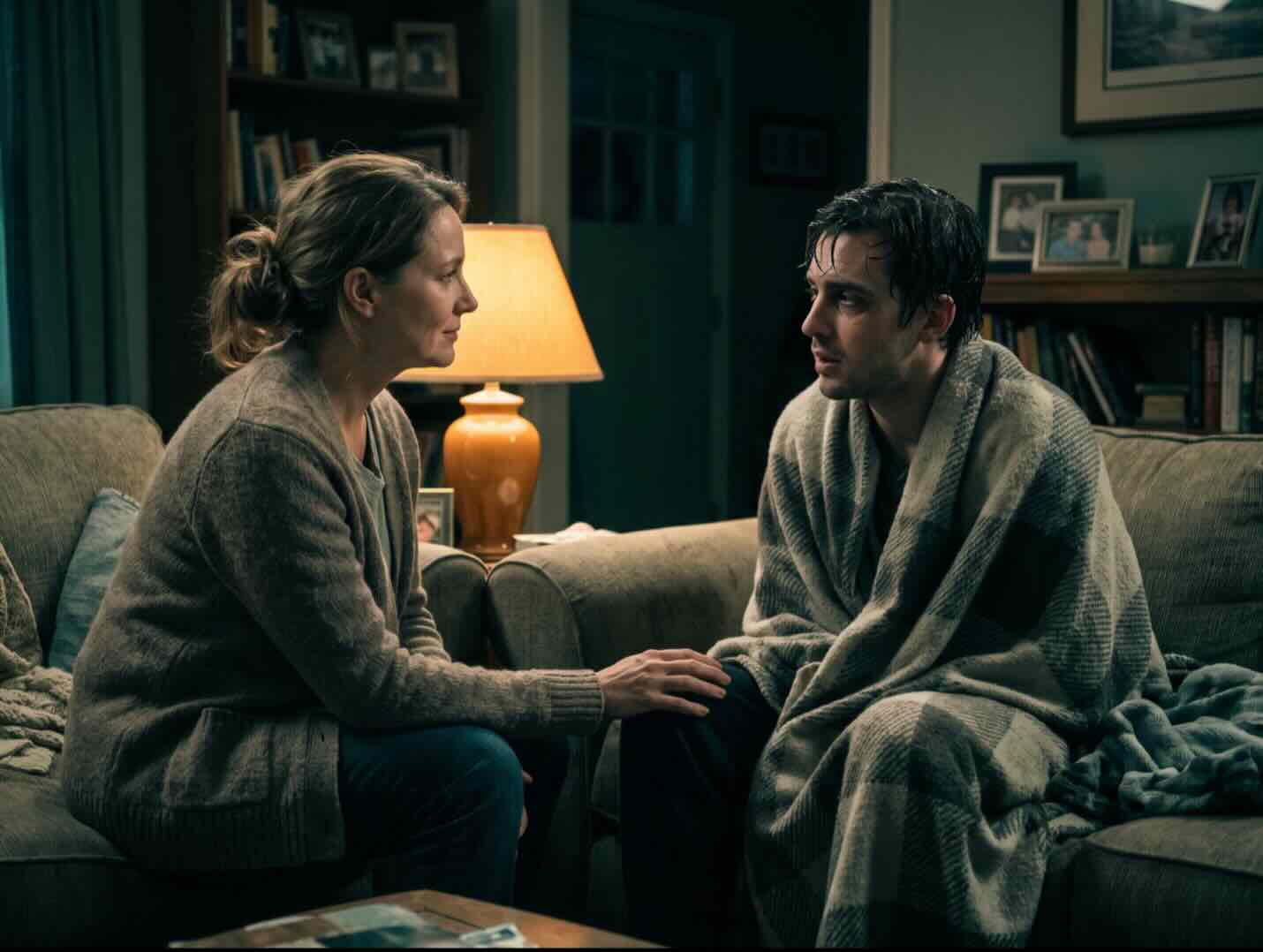
Alcohol withdrawal can cause seizures and delirium tremens, yet most people going through alcohol withdrawal never have either. The signs below help you stay on that side of the numbers. About 1 in 10 people with withdrawal symptoms has a seizure, and about 1 in 20 develops delirium tremens (Mirijello et al., 2015).
Call 911 or go to the nearest emergency room if you notice:
- A seizure of any length
- Confusion about where you are, what day it is, or who people are
- Seeing, hearing, or feeling things and not realizing they aren't real
- Fever, drenching sweats, or a heartbeat that keeps climbing
How soon can alcohol withdrawal seizures happen?
Withdrawal seizures can occur 24 to 48 hours after the last drink, often with whole-body stiffening and jerking (Mirijello et al., 2015). After a withdrawal seizure, doctors recommend at least a day of hospital observation (Bråthen et al., 2005).
If you had a seizure last time, you may carry shame about it. It has nothing to do with willpower. In one recent study, people with a history of withdrawal seizures or delirium tremens had about 7 times higher odds of complicated withdrawal the next time (Bagi et al., 2025). That makes a past seizure a reason to ask for more support.
What is delirium tremens, and how is it different from hallucinating?
Delirium tremens, also called withdrawal delirium, is the most severe form of alcohol withdrawal. It shows up as confusion that comes and goes, not knowing where you are, fever, drenching sweat, and severe agitation. It usually begins 48 to 72 hours after the last drink, can start up to 10 days later, and lasts several days (Mirijello et al., 2015).
Seeing or hearing things while you still know where you are is called alcoholic hallucinosis (Bhat et al., 2012). Delirium tremens adds the confusion. Among people hospitalized with delirium tremens, about 1 to 4 out of 100 die, and timely treatment can lower that (Schuckit, 2014).
Risk of severe alcohol withdrawal symptoms runs higher with past seizures or delirium tremens, older age, chronic alcohol use, other health problems, or low potassium or magnesium (Schuckit, 2014).
If you're the one watching, ask whether they know the day and where they are, and notice shaking that keeps getting worse. Stay nearby for the first three days, call for medical help, and skip fixes like more alcohol or someone else's pills. Feeling scared while you watch is a reasonable response, and acting on it is allowed.
Calling for help during withdrawal is a medical decision, the same as calling for chest pain.
A question about what you're seeing right now deserves a real answer. Check your treatment optionsand get support during alcohol withdrawal from people who do this every day.
I want to quit this weekend and be back at work Monday. Can I really do that alone?
You've probably run the numbers on quitting alcohol already: a last drink Friday night, a quiet weekend, and a normal Monday with nobody the wiser. Wanting to handle this privately makes sense, and the wish to do it alone deserves a straight answer.
Maybe what stands between you and a phone call is time off work, what to tell people, or the fear of being "that person" in detox. Each one is real, and each one can be talked through.
The weekend math works against the plan. Withdrawal peaks around 72 hours (Schuckit, 2014), so a last drink Friday night puts the peak near Monday morning, right when you planned to walk back into work. The seizure window of 24 to 48 hours would fall across Saturday night and Sunday (Mirijello et al., 2015).
Nobody can reliably tell in advance how they'll experience alcohol withdrawal, and it can start with severe symptoms (Mirijello et al., 2015). That's why trying to detox from alcohol at home alone carries real risk.
If you've had seizures, delirium tremens, or a hard withdrawal before, drink heavily every day, or take sleep or anxiety medication, talk to a clinician before you stop. If you're unsure, that uncertainty is itself the reason to ask about medical detox.
Managing alcohol withdrawal in a detox program means an assessment, regular symptom checks, medication matched to your measured symptoms, fluids, nutrition, and someone awake when it's hardest. Heavy drinking can drain vitamin B1 (thiamine), and clinicians give it early because the brain needs it to handle sugar safely (Bråthen et al., 2005).
At Wish Recovery, our medically supervised alcohol detox comes with 24/7 medical supervision in a private setting in Northridge, Los Angeles. Each plan follows a clinical protocol and is tailored to the person, because we recognize that each person is unique. You share how you feel, and our team adjusts your care to manage withdrawal as it changes. If you're coming from out of town, we offer travel assistance.
Curtis W. put it simply:
"I have been to a few rehab facilities and this is by far the best managed one I have ever been too it has exceptional service and staff..."
You don't have to decide anything today. A confidential call to ask what level of care fits you is a small, reversible step.
You don't have to choose between your job and your safety on your own. Have a confidential conversation with us about what a short, supervised detox could look like.
Why do I still feel off weeks after the shakes stop?

Feeling off after the shakes have stopped is common, and it has a biology.
Researchers describe three phases: acute withdrawal over the first few days, early abstinence from 3 to 6 weeks, and protracted abstinence beyond 3 months (Heilig et al., 2010). You may hear the stretch after the acute phase of alcohol withdrawal called post-acute withdrawal, the long period when mood, stress, and sleep are still recalibrating.
After prolonged alcohol use, low mood and anxiety ease over 3 to 6 weeks for most people, while relapse risk lasts longer (Heilig et al., 2010). Small hassles can land harder, good things can feel flat for a while, and the urge to drink just to make a bad feeling stop has a name: relief craving.
Sleep problems are common in alcohol dependence, and they may last up to 2 years into sobriety (Chakravorty et al., 2016). Using alcohol as a sleep aid may be part of what links poor sleep to relapse (Chakravorty et al., 2016).
Post-acute symptoms like these are real and treatable. Some medications that ease alcohol cravings, prescribed and watched by a clinician, are linked with less return to drinking (Jonas et al., 2014). Continuing care improves outcomes for people with alcohol use disorder, and support that lasts a year or more tends to show better results (McKay, 2021).
If you drank again after a stretch without alcohol, you're back at a decision point, with more information than before, and there's no blame in it.
One doable step is to talk with someone about your sleep before reaching for a drink, and to ask about step-down care, meaning support after detox or residential treatment.
At Wish Recovery, treatment for alcohol addiction continues after detox, from residential care into our intensive outpatient program, with therapy for the anxiety, depression, or trauma that can surface after the shakes stop. Jose M.shared what that time gave him:
"Learning about my mental health and my disease was very important and having nice counselors and workers that taught me and give me coping skills was amazing. They gave me tools to prevent relapse."
The weeks after the shakes deserve a plan too. See what support may be available for the next stage of your recovery.
Wherever I am on this clock, I don't have to watch it alone
Withdrawal runs on a clock, and willpower has nothing to do with how fast it moves. Your body adapted to alcohol, and it needs time and care to adapt back. Whenever you're ready, we're here, and a conversation with us is private and carries no obligation. That Friday-night plan to be fine by Monday can have people beside you.
Whatever hour you're in, someone can sit with you through it. Reach out to us today, and we'll take the next step together.
This article is for informational purposes only and isn't a substitute for professional medical advice, diagnosis, or treatment. If you or someone you love is having a medical emergency, call 911 right away.
What else am I still wondering about alcohol withdrawal?
How long does alcohol withdrawal last?
After stopping alcohol, acute symptoms of withdrawal ease a great deal by days 5 to 7 (Schuckit, 2014). Low mood and anxiety often improve over the next 3 to 6 weeks, while sleep problems and cravings can last for months (Heilig et al., 2010). A clinician can tell you what to expect for your own body and history.
What day is the worst for alcohol withdrawal?
For many people, it's day 3, about 72 hours after the last drink, when symptoms peak (Schuckit, 2014). Seizure risk is highest at 24 to 48 hours, and delirium tremens usually appears between 48 and 72 hours (Mirijello et al., 2015). Because those windows arrive close together, medical supervision from the first day matters most.
Can you die from alcohol withdrawal?
Rarely, but yes. About 1 to 4 out of 100 people hospitalized with delirium tremens die, and timely treatment lowers that risk (Schuckit, 2014). Assessment matters most for anyone with past seizures, delirium tremens, or heavy daily drinking. A clinician can check your risk before you stop, which is why we suggest a call comes first.
References
Mirijello, A., D'Angelo, C., Ferrulli, A., Vassallo, G., Antonelli, M., Caputo, F., Leggio, L., Gasbarrini, A., & Addolorato, G. (2015). Identification and management of alcohol withdrawal syndrome. Drugs, 75(4), 353–365. https://doi.org/10.1007/s40265-015-0358-1
Schuckit, M. A. (2014). Recognition and management of withdrawal delirium (delirium tremens). New England Journal of Medicine, 371(22), 2109–2113. https://doi.org/10.1056/NEJMra1407298
Heilig, M., Egli, M., Crabbe, J. C., & Becker, H. C. (2010). Acute withdrawal, protracted abstinence and negative affect in alcoholism: Are they linked? Addiction Biology, 15(2), 169–184. https://doi.org/10.1111/j.1369-1600.2009.00194.x
Ewing, J. A. (1984). Detecting alcoholism: The CAGE questionnaire. JAMA, 252(14), 1905–1907. https://doi.org/10.1001/jama.1984.03350140051025
Jesse, S., Bråthen, G., Ferrara, M., Keindl, M., Ben-Menachem, E., Tanasescu, R., Brodtkorb, E., Hillbom, M., Leone, M. A., & Ludolph, A. C. (2017). Alcohol withdrawal syndrome: Mechanisms, manifestations, and management. Acta Neurologica Scandinavica, 135(1), 4–16. https://doi.org/10.1111/ane.12671
Bhat, P. S., Ryali, V., Srivastava, K., Kumar, S. R., Prakash, J., & Singal, A. (2012). Alcoholic hallucinosis. Industrial Psychiatry Journal, 21(2), 155. https://doi.org/10.4103/0972-6748.119646
Sullivan, J. T., Sykora, K., Schneiderman, J., Naranjo, C. A., & Sellers, E. M. (1989). Assessment of alcohol withdrawal: The revised Clinical Institute Withdrawal Assessment for Alcohol scale (CIWA-Ar). British Journal of Addiction, 84(11), 1353–1357. https://doi.org/10.1111/j.1360-0443.1989.tb00737.x
Bråthen, G., Ben-Menachem, E., Brodtkorb, E., Galvin, R., Garcia-Monco, J. C., Halasz, P., Hillbom, M., Leone, M. A., & Young, A. B. (2005). EFNS guideline on the diagnosis and management of alcohol-related seizures: Report of an EFNS task force. European Journal of Neurology, 12(8), 575–581. https://doi.org/10.1111/j.1468-1331.2005.01247.x
Bagi, O., Kádár, B. K., Farkas, F. F., Gajdics, J., Pribék, I. K., & Lázár, B. A. (2025). The role of kindling mechanism: A validation study of the Hungarian version of the Prediction of Alcohol Withdrawal Severity Scale. PLOS ONE, 20(9), e0330629. https://doi.org/10.1371/journal.pone.0330629
Chakravorty, S., Chaudhary, N. S., & Brower, K. J. (2016). Alcohol dependence and its relationship with insomnia and other sleep disorders. Alcoholism: Clinical and Experimental Research, 40(11), 2271–2282. https://doi.org/10.1111/acer.13217
Jonas, D. E., Amick, H. R., Feltner, C., Bobashev, G., Thomas, K., Wines, R., Kim, M. M., Shanahan, E., Gass, C. E., Rowe, C. J., & Garbutt, J. C. (2014). Pharmacotherapy for adults with alcohol use disorders in outpatient settings: A systematic review and meta-analysis. JAMA, 311(18), 1889–1900. https://doi.org/10.1001/jama.2014.3628
McKay, J. R. (2021). Impact of continuing care on recovery from substance use disorder. Alcohol Research: Current Reviews, 41(1), 01. https://doi.org/10.35946/arcr.v41.1.01



 November 02, 2026

