I keep hearing that drunk words are sober thoughts—but is that actually true?
The phrase has been rattling around Western culture for centuries. Its roots trace back to the Latin proverb In vino veritas. This means “in wine, there is truth.” Wine occupied a central place in both Greek and Roman life. It functioned as more than a beverage. it was a social ritual that loosened tongues and, supposedly, exposed genuine sentiments (Winograd et al., 2012). That idea traveled through European drinking cultures and eventually landed in English folk wisdom as expressions like “drunkenness reveals what soberness conceals”(Winograd et al., 2012).
The saying resonates because we’ve all been on one side of a drunk confession. Someone blurts something raw at 2 AM. You replay it for days. And the question that lingers isn’t really about history or proverbs—it’s whether the person who said those drunken words was revealing their true thoughts or just losing control of a filter they normally keep in place.
Let’s introduce a more realistic reframe. The question worth asking isn’t whether alcohol reveals truth. The better question is whether intoxication gives us a reliable narrator. Because the saying assumes a hidden “true self” waiting to be unmasked. And the psychology of what alcohol does to the brain suggests the narrator is far less trustworthy than folk wisdom wants to believe. So is it true that drunk words are sober thoughts—or is the brain doing something more complicated under the influence?
What does alcohol actually do to my brain? Because I wasn’t thinking straight
Your prefrontal cortex is the brain’s editorial filter. It’s the part that reviews your thoughts before they reach your mouth, weighs consequences, and pumps the brakes on impulse. Alcohol quiets that whole system. The prefrontal cortex handles decision-making, working memory, and the inhibitory control that keeps raw emotion from running your conversations (Oscar-Berman, 2012). Once alcohol dims that machinery, what comes out of your mouth sounds unfiltered. And unfiltered feels like honesty. But a brain without its editor just gets louder, not truer.
Steele and Josephs gave this phenomenon a name: Alcohol Myopia Theory. Under intoxication, your attention collapses onto whatever emotional cue burns brightest in the room, and everything else—context, consequence, the thing you’ll wish you’d remembered—drops away (Parrott & Eckhardt, 2018). Anger locks your focus on the grievance. Affection zeroes in on the person across the table. And the brain, working with half its usual toolkit, delivers those feelings without the nuance they actually require.
Removing a filter doesn’t reveal hidden truth. A filterless brain still processes incomplete information. The alcohol effects on behavior go beyond loosened lips. When the prefrontal cortex goes quiet, the brain under intoxication can’t weigh context, consequences, or nuance—the exact skills you need to tell the truth well. Chronic heavy alcohol use has been consistently associated with impairments in executive functions, cognitive deficits, and self-regulation (Ames et al., 2014). That’s not a truth serum at work. That’s impaired judgment running the show.
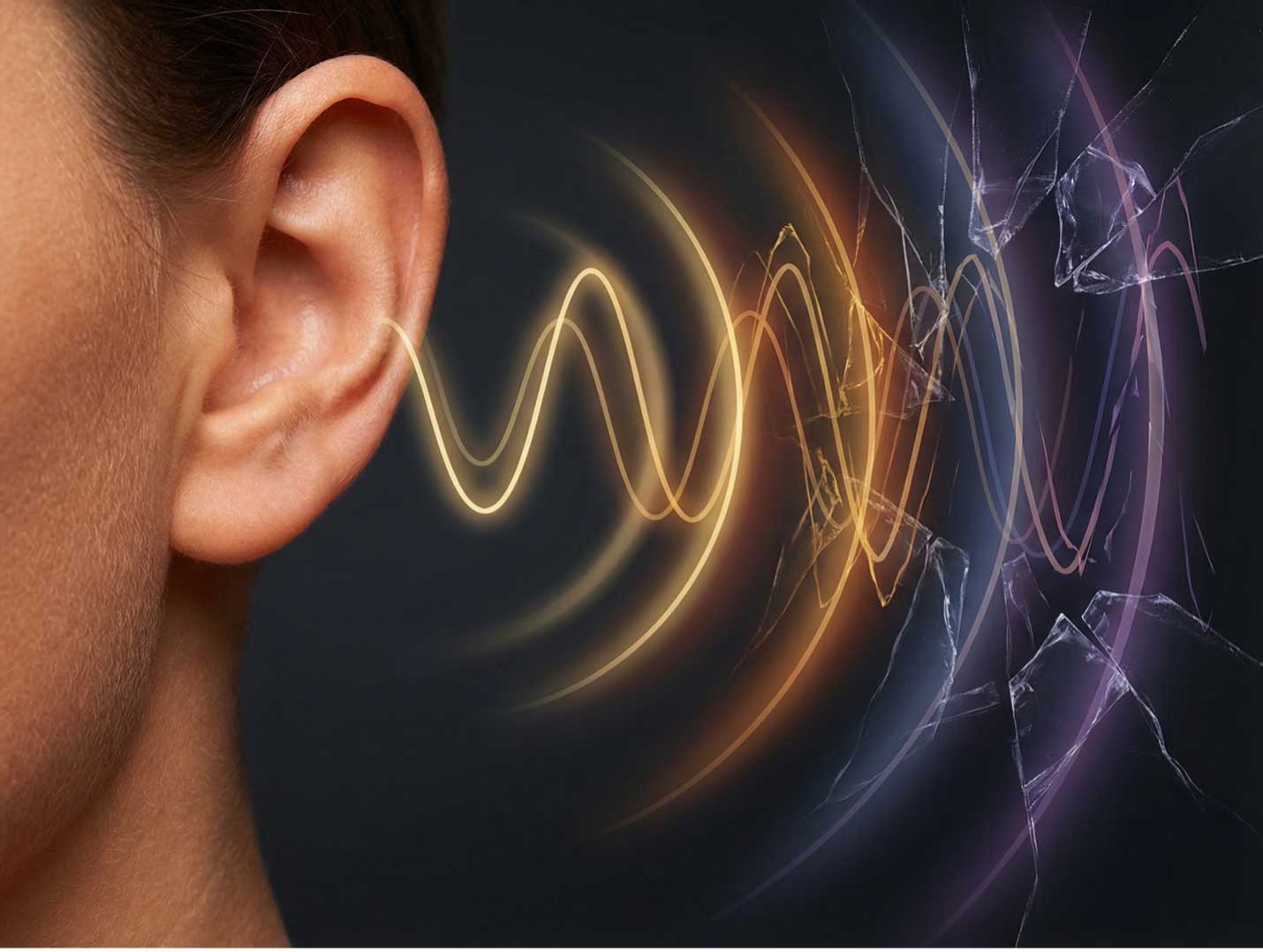
Are drunk thoughts really sober thoughts—or was the alcohol just making everything louder?
Alcohol turns up the volume on whatever emotion is already present. Insecurity becomes accusation. Affection becomes confession. Resentment becomes a speech you never rehearsed. Research shows that alcohol intoxication is associated with increased emotional reactivity and selective attention toward emotional cues(Paruzel-Czachura et al., 2023). The same person can be a “happy drunk” one night and an “angry drunk” another. The variable isn’t a truth serum—it’s the emotional state going in.
This is the emotional amplification effect. Negative urgency—impulsive behavior during extreme negative emotional states—predicted greater negative emotional reactivity in the moment, and that pattern appeared primarily during negative mood conditions, not neutral ones (VanderVeen et al., 2016). What that tells us: alcohol amplifies whatever emotional frequency is already humming. It doesn’t create new feelings from thin air. But it distorts them beyond recognition.
Are drunk thoughts sober thoughts? Sometimes they carry a seed of something real. But alcohol waters that seed with exaggeration and strips away context. Think of it this way: drunk thoughts are sober feelings run through a broken translator. The emotion might be authentic. The words it chose at midnight? Those belong to alcohol.
Understanding alcohol’s effect on emotions is the first step.
Explore evidence-based resources on alcohol and mental health.
Why do I say things when I’m drunk that don’t feel like me?
Because you’re not entirely you when you’re intoxicated. Personality traits—impulsivity, agreeableness, emotional suppression patterns—shape what emerges when alcohol lowers the gates. Research using the Five-Factor Model found that perceived drunken personality differed from sober personality across all five traits: less conscientiousness, less intellect, less agreeableness, more extraversion, and less neuroticism (Winograd et al., 2012). That’s not a mask slipping off. That’s a whole different behavioral profile showing up.
Social context matters too. A confession at a friend’s birthday carries different weight than drunk words spoken during a fight. Alcohol intoxication produces disinhibited behavior by decreasing the salience of competing response options, and the most salient response in any given situation is expressed regardless of whether it’s prosocial or antisocial (Hirsh et al., 2011). So the environment you’re drinking in helps determine what comes out of your mouth.
If someone said something hurtful while drunk, consider what they might have been carrying before the first drink. Unresolved anger, grief, loneliness—all of it gets amplified differently depending on the person’s personality and the room they’re standing in. And whether that weight is something they’ve been avoiding sober often says more than what they said after four drinks.

They said something awful while drunk. Do they really feel that way about me?
When someone you love says something devastating while drunk, the words land in your body before your brain can process them. You lie awake replaying the drunk confession, caught in a double bind: you can’t pretend it wasn’t said. But you can’t treat it as sworn testimony either.
Historically, the shared vulnerability of drinking together has created conditions for deeper communication and trust-building between people (Jobs, 2021). But that vulnerability cuts both ways. Words spoken under the influence of alcohol carry emotional fragments—raw, unedited—but they arrive without the self-control or context that gives language its reliability. The decisions made when intoxicated are unlikely to be a good reflection of a person’s sober goals and values (Clough, 2018).
What helps: Wait for sobriety. Name what was said without escalating. Ask “What were you feeling before you started drinking?” and listen for the emotion beneath the words. Forgiveness after a drunk confession isn’t agreement. It’s a decision to stop letting one night’s words define the relationship. Rebuilding trust after alcohol damages a conversation takes time—and sometimes the kind of support that a specialized treatment center in Los Angeles can provide when drinking patterns keep fracturing what matters most.
Rebuilding trust after a difficult conversation takes time—and sometimes guidance. If alcohol is complicating your relationships, reaching out isn’t a weakness. It’s clarity. Connect with compassionate support at Wish Recovery.
I keep saying things I regret when I drink. Should I be worried about that?
Sometimes this question is a way of asking something harder: “Should I be worried about my drinking?” And the fact that the question keeps showing up deserves a gentle, honest look.
Denial is a primary barrier to recognizing problem drinking—it protects the individual from conscious awareness of the extent and self-destructive nature of the problem (Naegle, 1996). That protective instinct is human. It doesn’t make you weak. But when drunk statements keep leading to regret, when relationships keep fracturing after nights out, when you’re Googling “are drunk words sober thoughts” more than once—those patterns are self-awareness knocking on a door you might not be ready to open yet.
Alcohol can develop into highly specific patterns depending on the first subjective effects experienced by the individual, with coping motives—the belief that alcohol will help manage negative emotions—predisposing people to problem drinking over time (Müller et al., 2023). You don’t need to have all the answers tonight. You just need to notice the question keeps showing up. And if it does, programs like Wish Recovery’s luxury alcohol detox in Los Angeles offer a private, personalized space to explore what’s underneath—with only 12 clients at a time and a clinical team that integrates evidence-based therapies like CBT and EMDR with holistic modalities.
Wondering if your relationship with alcohol deserves a closer look? Start with a free, confidential conversation. No pressure—just honest perspective. Take a moment to verify benefits.
If I needed alcohol to say it, can I learn to have those conversations sober?
If you needed alcohol to say something, that’s information about the barrier—not proof the feeling is truer when drunk. Sober vulnerability is harder because the editing room is open. You’re accountable in real time. But sober conversations carry credibility that drunk words never will.
Research on recovery communities has found that emotional honesty and openness—practiced in safe, supportive settings—enabled members to describe themselves as empowered and more successful in their healing (Kornfield, 2014). Survivors of trauma had similar feelings. They found that building trusting and honest relationships was pivotal to healing from deeply fractured bonds (Casassa et al., 2024). Sober communication is a learned skill, not an inherited gift.
Three ways to create safety for honest sober conversations: choose the time intentionally, start with “I feel” instead of “you always,” and give the other person space to respond. The conversations that heal almost never happen at the bottom of a bottle. They happen in the kind of sober, grounded moments that recovery makes possible—whether through therapy, an intensive outpatient program, or a luxury rehab in LA that treats the whole person, not just the substance.
Learning to have difficult conversations sober takes practice and support. Explore tools and strategies that make emotional honesty feel safer. Access our free resources.
So is it true that drunk words are sober thoughts? Here’s what I wish someone had told me sooner
The honest answer: sometimes, partially, and never completely. Drunk words can carry emotional fragments. But alcohol strips away context, amplifies intensity, and removes the cognitive machinery needed for truthful expression. Research with young people found that many viewed the transformative effect of alcohol as “a false representation of people’s ‘true’ selves”—a distortion rather than a revelation of character (Caluzzi et al., 2020). And adolescents framed alcohol-related aggression through a biological lens—something that happens to people, not something that reveals who they are (Whitaker et al., 2018).
The “drunken self” is a pharmacologically altered state that reshapes personality in complex, individually variable ways (Winograd et al., 2012). Drunk thoughts are sober feelings run through a broken translator. The better question to carry forward: what do I want to do with this information while I’m sober?
The fact that you’re here, reading this, asking the question—that tells you something more important than anything said last night. It tells you you’re paying attention. And paying attention is where every meaningful change begins.
Where the real truth lives
Whatever was said—to you or by you—deserves more than a hangover and a shrug. It deserves a sober conversation, honest self-reflection, and the kind of care that only happens when you’re fully present. Start there. That’s where the real truth lives.
You don’t have to figure this out alone. If alcohol is raising questions you can’t answer by yourself, talking to someone is the bravest kind of honesty. Reach out today.
-----------------
References
Ames, S., Wong, S., Bechara, A., Cappelli, C., Dust, M., Grenard, J., … & Stacy, A. (2014). Neural correlates of a Go/NoGo task with alcohol stimuli in light and heavy young drinkers. Behavioral Brain Research, 274, 382–389.
Caluzzi, G., MacLean, S., & Pennay, A. (2020). Re-configured pleasures: How young people feel good through abstaining or moderating their drinking. International Journal of Drug Policy, 77, 102709.
Casassa, K., England, G., & Karandikar, S. (2024). “I Had to Allow Myself to Heal”: How Survivors of Sex Trafficking Have Experienced Healing From Trauma Bonding. Violence Against Women, 31(9), 2350–2372.
Clough, A. (2018). Sober Regrets and Shared Risk Taking: Navigating Intoxicated Consent and Rape in the Courtroom. The Journal of Criminal Law, 82(6), 482–495.
Hirsh, J., Galinsky, A., & Zhong, C. (2011). Drunk, Powerful, and in the Dark. Perspectives on Psychological Science, 6(5), 415–427.
Jobs, S. (2021). The Other “Faithful Servant”: Uncertainty and Trust during Gabriel’s Conspiracy in Virginia, 1800. Amerikastudien/American Studies, 66(2), 355–376.
Kornfield, R. (2014). (Re)Working the Program: Gender and Openness in Alcoholics Anonymous. Ethos, 42(4), 415–439.
Müller, C., Schumann, G., Rehm, J., Kornhuber, J., & Lenz, B. (2023). Self-management with alcohol over lifespan: psychological mechanisms, neurobiological underpinnings, and risk assessment. Molecular Psychiatry, 28(7), 2683–2696.
Naegle, M. (1996). Alcohol and other Drug Abuse. AAOHN Journal, 44(9), 454–466.
Oscar-Berman, M. (2012). Function and Dysfunction of Prefrontal Brain Circuitry in Alcoholic Korsakoff’s Syndrome. Neuropsychology Review, 22(2), 154–169.
Parrott, D. and Eckhardt, C. (2018). Effects of alcohol on human aggression. Current Opinion in Psychology, 19, 1–5.
Paruzel-Czachura, M., Pypno-Blajda, K., & Sorokowski, P. (2023). Alcohol and morality: one alcoholic drink is enough to make people declare to harm others and behave impurely. Psychopharmacology, 240(10), 2163–2172.
VanderVeen, J., Plawecki, M., Millward, J., Hays, J., Kareken, D., O’Connor, S., … & Cyders, M. (2016). Negative urgency, mood induction, and alcohol seeking behaviors. Drug and Alcohol Dependence, 165, 151–158.
Whitaker, L., Brown, S., Young, B., Fereday, R., Coyne, S., & Qualter, P. (2018). Pervasive, hard-wired and male: Qualitative study of how UK adolescents view alcohol-related aggression. PLoS ONE, 13(2), e0191269.
Winograd, R., Littlefield, A., Martínez, J., & Sher, K. (2012). The Drunken Self: The Five-Factor Model as an Organizational Framework for Characterizing Perceptions of One’s Own Drunkenness.
Alcoholism: Clinical and Experimental Research, 36(10), 1787–1793.



 March 16, 2026


