Alcohol Use Disorder: Symptoms, Diagnostic Criteria, Severity Levels, and Treatment Options

Alcohol Use Disorder: Symptoms, Diagnostic Criteria, Severity Levels, and Treatment Options

Maybe it's not every night. Maybe it's just how you unwind after a day that wouldn't quit, or how a family gathering gets bearable, or how you sleep. You've told yourself it's normal more than once. But something keeps you up at 2 a.m., running the math on your own drinking, wondering if there's a name for what this actually is.

There is. Alcohol use disorder (AUD) is a real, diagnosable condition shaped by genetics and environmental factors as much as willpower, and it exists on a spectrum. Here's how it's actually measured, and what you can do next.

Key takeaways

  • Alcohol use disorder is diagnosed using 11 specific criteria, not a vague sense of "drinking too much."
  • Meeting even 2 or 3 criteria counts as a real, mild diagnosis worth taking seriously.
  • A short self-screen can tell you whether it's worth talking to someone, without labeling you.
  • Every severity level, including mild, responds to treatment, and there's more than one way to get it.


If any of this sounds like your own late-night math, you don't have to sort it out by yourself. Reach out to our team at Wish Recovery for a confidential conversation, no commitment attached.


Alcohol use disorder is a diagnosable medical condition, not a personal failing. It's one specific type of substance use disorder, and the DSM-5, published by the American Psychiatric Association, defines it as a pattern of drinking, or relationship with alcohol, that causes real distress or trouble in daily life, measured against 11 specific signs like needing more to feel the same effect, feeling physically off when you stop, and continuing to drink despite the problems it's causing (Sellman et al. 2014). Meeting two or three of those signs points to a mild diagnosis, four or five to moderate, and six or more to severe (Miller et al. 2023). The label replaced two older, separate diagnoses back in 2013, once researchers realized "alcohol abuse" and "alcohol dependence" were really one condition on a spectrum (Compton et al. 2013), and every point on that spectrum, including the mild end, is treatable.

Am I actually developing a problem, or am I just a heavy drinker?

Maybe it's not every day. Maybe it's just how you unwind, and most weeks it feels completely manageable. Then something happens, a comment from someone who loves you, a morning you can't fully account for, a promise to yourself you didn't keep, and the question won't quite leave you alone.

Here's what's worth knowing before you go any further: reading this isn't a diagnosis, and it isn't supposed to be. Only a licensed clinician can actually diagnose alcohol use disorder. What this can do is give you something concrete to measure your own experience against, not just a feeling you can't shake.

It also helps to know that the language around this has changed, and for a good reason. For years, "alcohol abuse" and "alcohol dependence" were treated as two separate problems. In 2013, that changed.

Researchers found the two didn't hold up as distinct conditions so much as different points on one spectrum. So they were folded into a single diagnosis, alcohol use disorder, sorted by severity (Compton et al. 2013). If you were told years ago that you had "dependence," you'd now simply be assessed for AUD and where it falls on that scale. For a fuller look at how that diagnosis plays out day to day, we've also written about what alcohol use disorder actually looks like elsewhere on our site.

Part of why this is hard to look at directly is the word itself. You'll still hear it called alcoholism, alcohol misuse, alcohol addiction, substance abuse, or just a drinking problem, and none of those older labels are wrong exactly, they're just less precise than a clinical diagnosis. Research tracking a decade of published alcohol studies found that older, harsher language like "alcoholic" never really went away, even as the field moved to "alcohol use disorder." That language keeps people from reaching out (Shi et al. 2022).

A large U.S. study backs this up. People who felt more judged for their drinking were far less likely to seek any kind of help at all (Keyes et al. 2010). None of that is really about vocabulary. It's about naming, honestly, why looking closer at your own drinking can feel so hard to do, even when part of you already suspects the answer.

You don't need to have decided anything yet. You just need accurate information to decide with.


Wondering what your coverage would actually look like if you ever needed it? Verify your insurance benefits confidentially, before you decide anything else.


What actually counts as alcohol use disorder, according to doctors?

Once you're willing to look closer, the next question is usually practical: what, exactly, are doctors measuring? Doctors sometimes call this list of signs and symptoms the criteria for an alcohol use disorder diagnosis, but the plain-language version is simpler than it sounds. The DSM-5 lays out 11 specific criteria, grouped here into four plain-language clusters so you're not facing one long list of eleven separate things at once. Alcohol use disorder is one of several use disorders described in the DSM-5, but its criteria are specific to alcohol.


What's being measured

What it can look like in real life

Impaired control

Drinking more, or for longer, than you meant to. Wanting to cut back but not quite managing it, an inability to stop even when part of you wants to. A lot of time spent drinking, being drunk, or recovering from it. Cravings strong enough to crowd out other thoughts, tied to changes in the brain's reward system.

Social and life impact

Drinking getting in the way of work, school (what clinicians call occupational impact), or responsibilities at home. Continuing to drink even though it's straining a relationship you care about. Giving up things you used to enjoy so there's more room to drink.

Risky use

Drinking in situations where it's genuinely dangerous, like before driving, or drinking to the point of intoxication or alcohol poisoning. Continuing to drink even after it's caused a health or emotional problem you can point to and name.

Physical adaptation

Needing noticeably more alcohol than you used to for the same effect, known clinically as experiencing tolerance. Feeling physically unwell when you stop or cut back, known as withdrawal.


If you counted two or three of these for yourself over the past year, that's worth sitting with, not panicking over.

This isn't an arbitrary checklist someone drew up. A national study comparing the old and new diagnostic systems found they were measuring largely the same thing. That's part of why the field settled on one single, severity-graded model, not separate categories (Compton et al. 2013).

A clinical review spanning 60 years of alcohol-related diagnoses reached a similar conclusion. A unified, criteria-based approach better reflects how drinking problems actually show up in real life: gradually, and on a spectrum, not as two distinct diseases (Sellman et al. 2014). What you're looking at above isn't guesswork. It's what six decades of research settled on.


Is my drinking mild, moderate, or severe, and how would I even know?

Once you've counted your own criteria, the natural next question is what that number actually means.

Criteria met in the past year

Severity

2 to 3

Mild

4 to 5

Moderate

6 or more

Severe


A quick, informal way to get a sense of where you might land is a three-question self-check some doctors use, sometimes called AUDIT-C: how often you drink, the amount of alcohol you typically have on a day you're drinking, and how often you have six or more drinks in one sitting, sometimes labeled binge drinking. The National Institute on Alcohol Abuse and Alcoholism, or NIAAA, developed the longer screening tool this shorter version comes from, and it's used in medical offices across the country.

This tells you whether a conversation about your alcohol consumption is worth having. It doesn't tell you what's wrong with you, and it isn't a diagnosis. Only a clinician can make that call.

A cohort study following people with AUD over time found that certain specific patterns, not just a raw criteria count, raise the odds of moving from mild or moderate into severe territory (Miller et al. 2023). That's not meant to scare you. Not every mild case gets worse. But it's a real reason to look at this now, while it's still mild, and not wait to see what happens.

A validation study of that same three-question self-check found it works about as well as much longer screening tools at spotting risky drinking in everyday medical settings (Bradley et al. 2003). That's part of why it's become such a common first step.

If you've gone a day or more without a drink, alcohol withdrawal symptoms may show up quickly: shaking hands, heavy sweating, nausea and vomiting, or a racing heart, and that's worth taking seriously on its own. For people with more severe alcohol use disorder, alcohol withdrawal syndrome can escalate to seizures or hallucinations in the hours following your last drink, and that's a medical situation, not something to manage alone at home. This is one of the few places in this article where we'd say plainly: if that describes you, inpatient, medically supervised detox exists specifically so this part isn't something you white-knuckle through by yourself.

Wherever your number lands, it isn't a verdict on your character. Even a mild result is a legitimate reason to learn more, not something to explain away.


If your own results left you with more questions than answers, that's exactly what talking with someone at Wish Recovery confidentially can help sort out.


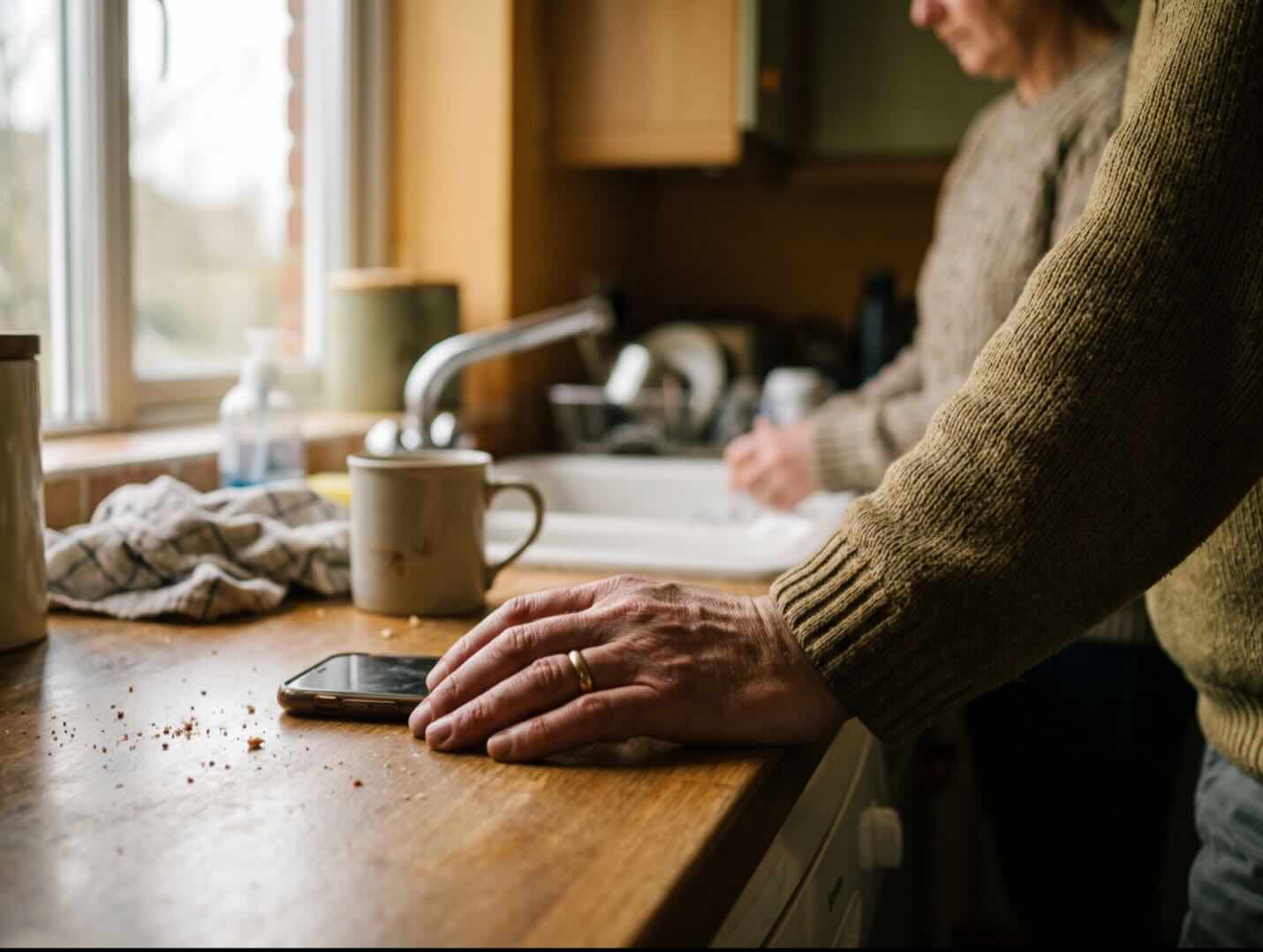
What does this actually look like in an ordinary week?
Alcohol use disorder is a diagnosable medical condition, not a personal failing. It's one specific type of substance use disorder, and the DSM-5, published by the American Psychiatric Association, defines it as a pattern of drinking, or relationship with alcohol, that causes real distress or trouble in daily life, measured against 11 specific signs like needing more to feel the same effect, feeling physically off when you stop, and continuing to drink despite the problems it's causing (Sellman et al. 2014). Meeting two or three of those signs points to a mild diagnosis, four or five to moderate, and six or more to severe (Miller et al. 2023). The label replaced two older, separate diagnoses back in 2013, once researchers realized "alcohol abuse" and "alcohol dependence" were really one condition on a spectrum (Compton et al. 2013), and every point on that spectrum, including the mild end, is treatable. Am I actually developing a problem, or am I just a heavy drinker? Maybe it's not every day. Maybe it's just how you unwind, and most weeks it feels completely manageable. Then something happens, a comment from someone who loves you, a morning you can't fully account for, a promise to yourself you didn't keep, and the question won't quite leave you alone. Here's what's worth knowing before you go any further: reading this isn't a diagnosis, and it isn't supposed to be. Only a licensed clinician can actually diagnose alcohol use disorder. What this can do is give you something concrete to measure your own experience against, not just a feeling you can't shake. It also helps to know that the language around this has changed, and for a good reason. For years, "alcohol abuse" and "alcohol dependence" were treated as two separate problems. In 2013, that changed. Researchers found the two didn't hold up as distinct conditions so much as different points on one spectrum. So they were folded into a single diagnosis, alcohol use disorder, sorted by severity (Compton et al. 2013). If you were told years ago that you had "dependence," you'd now simply be assessed for AUD and where it falls on that scale. For a fuller look at how that diagnosis plays out day to day, we've also written about what alcohol use disorder actually looks like elsewhere on our site. Part of why this is hard to look at directly is the word itself. You'll still hear it called alcoholism, alcohol misuse, alcohol addiction, substance abuse, or just a drinking problem, and none of those older labels are wrong exactly, they're just less precise than a clinical diagnosis. Research tracking a decade of published alcohol studies found that older, harsher language like "alcoholic" never really went away, even as the field moved to "alcohol use disorder." That language keeps people from reaching out (Shi et al. 2022). A large U.S. study backs this up. People who felt more judged for their drinking were far less likely to seek any kind of help at all (Keyes et al. 2010). None of that is really about vocabulary. It's about naming, honestly, why looking closer at your own drinking can feel so hard to do, even when part of you already suspects the answer. You don't need to have decided anything yet. You just need accurate information to decide with. Wondering what your coverage would actually look like if you ever needed it? Verify your insurance benefits confidentially, before you decide anything else. What actually counts as alcohol use disorder, according to doctors? Once you're willing to look closer, the next question is usually practical: what, exactly, are doctors measuring? Doctors sometimes call this list of signs and symptoms the criteria for an alcohol use disorder diagnosis, but the plain-language version is simpler than it sounds. The DSM-5 lays out 11 specific criteria, grouped here into four plain-language clusters so you're not facing one long list of eleven separate things at once. Alcohol use disorder is one of several use disorders described in the DSM-5, but its criteria are specific to alcohol. What's being measured	What it can look like in real life Impaired control	Drinking more, or for longer, than you meant to. Wanting to cut back but not quite managing it, an inability to stop even when part of you wants to. A lot of time spent drinking, being drunk, or recovering from it. Cravings strong enough to crowd out other thoughts, tied to changes in the brain's reward system. Social and life impact	Drinking getting in the way of work, school (what clinicians call occupational impact), or responsibilities at home. Continuing to drink even though it's straining a relationship you care about. Giving up things you used to enjoy so there's more room to drink. Risky use	Drinking in situations where it's genuinely dangerous, like before driving, or drinking to the point of intoxication or alcohol poisoning. Continuing to drink even after it's caused a health or emotional problem you can point to and name. Physical adaptation	Needing noticeably more alcohol than you used to for the same effect, known clinically as experiencing tolerance. Feeling physically unwell when you stop or cut back, known as withdrawal. If you counted two or three of these for yourself over the past year, that's worth sitting with, not panicking over. This isn't an arbitrary checklist someone drew up. A national study comparing the old and new diagnostic systems found they were measuring largely the same thing. That's part of why the field settled on one single, severity-graded model, not separate categories (Compton et al. 2013). A clinical review spanning 60 years of alcohol-related diagnoses reached a similar conclusion. A unified, criteria-based approach better reflects how drinking problems actually show up in real life: gradually, and on a spectrum, not as two distinct diseases (Sellman et al. 2014). What you're looking at above isn't guesswork. It's what six decades of research settled on. Is my drinking mild, moderate, or severe, and how would I even know? Once you've counted your own criteria, the natural next question is what that number actually means. Criteria met in the past year	Severity 2 to 3	Mild 4 to 5	Moderate 6 or more	Severe A quick, informal way to get a sense of where you might land is a three-question self-check some doctors use, sometimes called AUDIT-C: how often you drink, the amount of alcohol you typically have on a day you're drinking, and how often you have six or more drinks in one sitting, sometimes labeled binge drinking. The National Institute on Alcohol Abuse and Alcoholism, or NIAAA, developed the longer screening tool this shorter version comes from, and it's used in medical offices across the country. This tells you whether a conversation about your alcohol consumption is worth having. It doesn't tell you what's wrong with you, and it isn't a diagnosis. Only a clinician can make that call. A cohort study following people with AUD over time found that certain specific patterns, not just a raw criteria count, raise the odds of moving from mild or moderate into severe territory (Miller et al. 2023). That's not meant to scare you. Not every mild case gets worse. But it's a real reason to look at this now, while it's still mild, and not wait to see what happens. A validation study of that same three-question self-check found it works about as well as much longer screening tools at spotting risky drinking in everyday medical settings (Bradley et al. 2003). That's part of why it's become such a common first step. If you've gone a day or more without a drink, alcohol withdrawal symptoms may show up quickly: shaking hands, heavy sweating, nausea and vomiting, or a racing heart, and that's worth taking seriously on its own. For people with more severe alcohol use disorder, alcohol withdrawal syndrome can escalate to seizures or hallucinations in the hours following your last drink, and that's a medical situation, not something to manage alone at home. This is one of the few places in this article where we'd say plainly: if that describes you, inpatient, medically supervised detox exists specifically so this part isn't something you white-knuckle through by yourself. Wherever your number lands, it isn't a verdict on your character. Even a mild result is a legitimate reason to learn more, not something to explain away. If your own results left you with more questions than answers, that's exactly what talking with someone at Wish Recovery confidentially can help sort out. What does this actually look like in an ordinary week?   Numbers and criteria are one thing. The effects of alcohol use disorder show up in ways a checklist can't capture. For a lot of people, alcohol use disorder doesn't look dramatic from the outside. It looks like a phone call you meant to return and didn't. A Tuesday you explained away without quite examining it. A version of yourself you've quietly stopped introducing to new people. None of that shows up on a checklist. It's often where the weight actually sits. Here's something worth knowing if part of you has been thinking, "it's not that bad yet": a study of adults being treated for substance use disorder found that even mild and moderate AUD, not just severe cases, were tied to real difficulty at work and in relationships (Mannes et al. 2021). The impact doesn't wait politely for things to get worse before it starts costing you something. Drinking alcohol heavily over time also raises the risk of developing liver disease and increased blood pressure, and left unaddressed, alcohol can lead to lasting damage in both areas, physical costs that build quietly, long before anyone would call the drinking itself severe. There's also a quieter cost worth naming honestly. A long-term study on how labels affect people found that those who felt more judged about their drinking experienced more persistent problems over time, plus less support from the people around them (Glass et al. 2013). The shame itself can be part of what keeps the pattern going. Staying silent isn't a neutral choice. It has its own weight. If something in this section landed, you're not alone in that, and you're allowed to sit with it before you decide what comes next. We've also written about how emotional flatness in early recovery can show up even after the drinking stops, which is worth knowing before you assume feeling "off" means something has gone wrong. What actually helps, and where do I even start?   If any part of this has felt familiar, the next honest question is what alcohol treatment actually looks like. Treatment isn't one-size-fits-all, and it isn't one option. Medical detox exists for people whose physical dependence is significant enough that stopping needs to be managed safely. Residential, or inpatient alcohol treatment, offers structured, live-in care for people who need to step fully away from their daily environment for a while. And outpatient or intensive outpatient programs are built for people who need real treatment, but also need it to fit around a job, school, or family responsibilities. They're also where a lot of relapse-prevention work happens, once someone is back in their daily environment. None of these is automatically "more serious" than the others. They're matched to what a person actually needs. Medication is a legitimate, evidence-backed part of addiction treatment for a lot of people, not a last resort and not a crutch. A meta-analysis of two commonly used medications found both meaningfully reduced the odds of returning to drinking compared to no medication at all (Maisel et al. 2012). And a more recent systematic review supporting current treatment guidelines found that combining medication with therapy produces better outcomes than relying on either one alone (McPheeters et al. 2023). What actually helps most people on the way to lasting sobriety is a combination, not a single silver bullet. This is also where we can tell you plainly what we do at Wish Recovery. We offer comprehensive treatment across a full continuum of care, from medical detox through residential treatment through outpatient support, so you don't lose continuity as your needs change. And we don't run one-size-fits-all treatment programs. Every treatment plan here is built around your actual clinical picture, your history, and your life, not a template. If a demanding career or a family that depends on you has made "getting help" feel logistically impossible, that's exactly the kind of thing individualized planning is meant to solve. One of our clients put it this way in a review she left after finishing treatment here: "From the moment I walked through the doors, I felt welcomed, supported, and cared for. The staff is incredibly compassionate and knowledgeable, making sure every client receives personalized care tailored to their needs... The programs are structured yet flexible, offering everything from medical detox to holistic therapies that really make a difference. I never felt judged, only encouraged and empowered to take the next steps in my recovery journey." (Brianna C., verified Google review) Not every level of care is right for every situation, and a licensed provider, not this article, is who makes that determination with you. Not sure what your plan actually covers? Check your insurance benefits today, quietly and with no pressure attached. You don't have to have all of this figured out tonight Alcohol use disorder exists on a real spectrum, and it's treatable at every point, including wherever you might be tonight. Most people who meet criteria, even mild criteria, don't act right away, and that hesitation doesn't disqualify you from getting real help when you're ready. A conversation, a screening, or just reading this again in a month are all legitimate next steps. Whenever you're ready, we're here. Start a confidential conversation with Wish Recovery. This article is intended for informational purposes only and is not a substitute for professional medical advice, diagnosis, or treatment. If you're concerned about your own drinking or someone else's, please consult a licensed healthcare provider. Frequently asked questions What is the difference between alcohol abuse and alcohol use disorder? "Alcohol abuse" and "alcohol dependence" used to be treated as two separate diagnoses. In 2013, they were combined into one condition, alcohol use disorder, now assessed by severity: mild, moderate, or severe. How many of the 11 criteria do you need for a diagnosis? Meeting two criteria within the same 12-month period is enough for a diagnosis at all: two or three is considered mild, four or five moderate, and six or more severe. Only a licensed clinician can make a formal diagnosis. Is a self-screen like AUDIT-C the same as a diagnosis? No. A self-screen is a quick, validated tool that looks at how you use alcohol and flags whether a conversation with a professional is worth having. It doesn't replace an actual clinical evaluation, and it isn't meant to. Can mild alcohol use disorder go away on its own? Some people do cut back or stop drinking without formal treatment, especially at the mild end of the spectrum. But certain patterns raise the odds of it progressing to something more severe, which is exactly why early attention tends to lower that risk more reliably than simply waiting to see what happens.   References Shi, H. D., McKee, S. A., & Cosgrove, K. (2022). Why language matters in alcohol research: Reducing stigma. Alcoholism: Clinical and Experimental Research, 46(6), 1103–1109. https://doi.org/10.1111/acer.14840 Keyes, K. M., Hatzenbuehler, M. L., McLaughlin, K. A., et al. (2010). Stigma and treatment for alcohol disorders in the United States. American Journal of Epidemiology, 172(12), 1364–1372. https://doi.org/10.1093/aje/kwq304 Compton, W. M., Dawson, D. A., Goldstein, R. B., & Grant, B. F. (2013). Crosswalk between DSM-IV dependence and DSM-5 substance use disorders for opioids, cannabis, cocaine and alcohol. Drug and Alcohol Dependence, 132(1–2), 387–390. https://doi.org/10.1016/j.drugalcdep.2013.02.036 Sellman, J. D., Foulds, J., & Adamson, S. J. (2014). DSM-5 alcoholism: A 60-year perspective. Australian & New Zealand Journal of Psychiatry, 48(7), 649–655. https://doi.org/10.1177/0004867414532849 Miller, A. P., Kuo, S. I., Johnson, E. C., et al. (2023). Diagnostic criteria for identifying individuals at high risk of progression from mild or moderate to severe alcohol use disorder. JAMA Network Open, 6(10), e2337192. https://doi.org/10.1001/jamanetworkopen.2023.37192 Bradley, K. A., Bush, K. R., Epler, A. J., et al. (2003). Two brief alcohol-screening tests from the Alcohol Use Disorders Identification Test (AUDIT): Validation in a female Veterans Affairs patient population. Archives of Internal Medicine, 163(7), 821–829. https://doi.org/10.1001/archinte.163.7.821 Mannes, Z. L., Shmulewitz, D., Livne, O., et al. (2021). Correlates of mild, moderate, and severe alcohol use disorder among adults with problem substance use. Alcoholism: Clinical and Experimental Research, 45(11), 2274–2285. https://doi.org/10.1111/acer.14701 Glass, J. E., Mowbray, O., Link, B. G., et al. (2013). Alcohol stigma and persistence of alcohol and other psychiatric disorders: A modified labeling theory approach. Drug and Alcohol Dependence, 133(2), 685–692. https://doi.org/10.1016/j.drugalcdep.2013.08.016 Maisel, N. C., Blodgett, J. C., Wilbourne, P. L., et al. (2012). Meta-analysis of naltrexone and acamprosate for treating alcohol use disorders: When are these medications most helpful? Addiction, 108(2), 275–293. https://doi.org/10.1111/j.1360-0443.2012.04054.x McPheeters, M., O'Connor, E., Riley, S. P., et al. (2023). Pharmacotherapy for alcohol use disorder: A systematic review and meta-analysis. JAMA, 330(17), 1653–1665. https://doi.org/10.1001/jama.2023.19761


Numbers and criteria are one thing. The effects of alcohol use disorder show up in ways a checklist can't capture.

For a lot of people, alcohol use disorder doesn't look dramatic from the outside. It looks like a phone call you meant to return and didn't. A Tuesday you explained away without quite examining it.

A version of yourself you've quietly stopped introducing to new people. None of that shows up on a checklist. It's often where the weight actually sits.

Here's something worth knowing if part of you has been thinking, "it's not that bad yet": a study of adults being treated for substance use disorder found that even mild and moderate AUD, not just severe cases, were tied to real difficulty at work and in relationships (Mannes et al. 2021). The impact doesn't wait politely for things to get worse before it starts costing you something. Drinking alcohol heavily over time also raises the risk of developing liver disease and increased blood pressure, and left unaddressed, alcohol can lead to lasting damage in both areas, physical costs that build quietly, long before anyone would call the drinking itself severe.

There's also a quieter cost worth naming honestly. A long-term study on how labels affect people found that those who felt more judged about their drinking experienced more persistent problems over time, plus less support from the people around them (Glass et al. 2013).

The shame itself can be part of what keeps the pattern going. Staying silent isn't a neutral choice. It has its own weight.

If something in this section landed, you're not alone in that, and you're allowed to sit with it before you decide what comes next. We've also written about how emotional flatness in early recovery can show up even after the drinking stops, which is worth knowing before you assume feeling "off" means something has gone wrong.


What actually helps, and where do I even start?

What actually helps, and where do I even start?

If any part of this has felt familiar, the next honest question is what alcohol treatment actually looks like.

Treatment isn't one-size-fits-all, and it isn't one option. Medical detox exists for people whose physical dependence is significant enough that stopping needs to be managed safely. Residential, or inpatient alcohol treatment, offers structured, live-in care for people who need to step fully away from their daily environment for a while.

And outpatient or intensive outpatient programs are built for people who need real treatment, but also need it to fit around a job, school, or family responsibilities. They're also where a lot of relapse-prevention work happens, once someone is back in their daily environment. None of these is automatically "more serious" than the others. They're matched to what a person actually needs.

Medication is a legitimate, evidence-backed part of addiction treatment for a lot of people, not a last resort and not a crutch. A meta-analysis of two commonly used medications found both meaningfully reduced the odds of returning to drinking compared to no medication at all (Maisel et al. 2012). And a more recent systematic review supporting current treatment guidelines found that combining medication with therapy produces better outcomes than relying on either one alone (McPheeters et al. 2023). What actually helps most people on the way to lasting sobriety is a combination, not a single silver bullet.

This is also where we can tell you plainly what we do at Wish Recovery. We offer comprehensive treatment across a full continuum of care, from medical detox through residential treatment through outpatient support, so you don't lose continuity as your needs change. And we don't run one-size-fits-all treatment programs.

Every treatment plan here is built around your actual clinical picture, your history, and your life, not a template. If a demanding career or a family that depends on you has made "getting help" feel logistically impossible, that's exactly the kind of thing individualized planning is meant to solve.

One of our clients put it this way in a review she left after finishing treatment here: "From the moment I walked through the doors, I felt welcomed, supported, and cared for. The staff is incredibly compassionate and knowledgeable, making sure every client receives personalized care tailored to their needs... The programs are structured yet flexible, offering everything from medical detox to holistic therapies that really make a difference. I never felt judged, only encouraged and empowered to take the next steps in my recovery journey." (Brianna C., verified Google review)

Not every level of care is right for every situation, and a licensed provider, not this article, is who makes that determination with you.


Not sure what your plan actually covers? Check your insurance benefits today, quietly and with no pressure attached.


You don't have to have all of this figured out tonight

Alcohol use disorder exists on a real spectrum, and it's treatable at every point, including wherever you might be tonight. Most people who meet criteria, even mild criteria, don't act right away, and that hesitation doesn't disqualify you from getting real help when you're ready. A conversation, a screening, or just reading this again in a month are all legitimate next steps.

Whenever you're ready, we're here. Start a confidential conversation with Wish Recovery.


This article is intended for informational purposes only and is not a substitute for professional medical advice, diagnosis, or treatment. If you're concerned about your own drinking or someone else's, please consult a licensed healthcare provider.


Frequently asked questions

What is the difference between alcohol abuse and alcohol use disorder?

"Alcohol abuse" and "alcohol dependence" used to be treated as two separate diagnoses. In 2013, they were combined into one condition, alcohol use disorder, now assessed by severity: mild, moderate, or severe.

How many of the 11 criteria do you need for a diagnosis?

Meeting two criteria within the same 12-month period is enough for a diagnosis at all: two or three is considered mild, four or five moderate, and six or more severe. Only a licensed clinician can make a formal diagnosis.

Is a self-screen like AUDIT-C the same as a diagnosis?

No. A self-screen is a quick, validated tool that looks at how you use alcohol and flags whether a conversation with a professional is worth having. It doesn't replace an actual clinical evaluation, and it isn't meant to.

Can mild alcohol use disorder go away on its own?

Some people do cut back or stop drinking without formal treatment, especially at the mild end of the spectrum. But certain patterns raise the odds of it progressing to something more severe, which is exactly why early attention tends to lower that risk more reliably than simply waiting to see what happens.


References

Shi, H. D., McKee, S. A., & Cosgrove, K. (2022). Why language matters in alcohol research: Reducing stigma. Alcoholism: Clinical and Experimental Research, 46(6), 1103–1109. https://doi.org/10.1111/acer.14840

Keyes, K. M., Hatzenbuehler, M. L., McLaughlin, K. A., et al. (2010). Stigma and treatment for alcohol disorders in the United States. American Journal of Epidemiology, 172(12), 1364–1372. https://doi.org/10.1093/aje/kwq304

Compton, W. M., Dawson, D. A., Goldstein, R. B., & Grant, B. F. (2013). Crosswalk between DSM-IV dependence and DSM-5 substance use disorders for opioids, cannabis, cocaine and alcohol. Drug and Alcohol Dependence, 132(1–2), 387–390. https://doi.org/10.1016/j.drugalcdep.2013.02.036

Sellman, J. D., Foulds, J., & Adamson, S. J. (2014). DSM-5 alcoholism: A 60-year perspective. Australian & New Zealand Journal of Psychiatry, 48(7), 649–655. https://doi.org/10.1177/0004867414532849

Miller, A. P., Kuo, S. I., Johnson, E. C., et al. (2023). Diagnostic criteria for identifying individuals at high risk of progression from mild or moderate to severe alcohol use disorder. JAMA Network Open, 6(10), e2337192. https://doi.org/10.1001/jamanetworkopen.2023.37192

Bradley, K. A., Bush, K. R., Epler, A. J., et al. (2003). Two brief alcohol-screening tests from the Alcohol Use Disorders Identification Test (AUDIT): Validation in a female Veterans Affairs patient population. Archives of Internal Medicine, 163(7), 821–829. https://doi.org/10.1001/archinte.163.7.821

Mannes, Z. L., Shmulewitz, D., Livne, O., et al. (2021). Correlates of mild, moderate, and severe alcohol use disorder among adults with problem substance use. Alcoholism: Clinical and Experimental Research, 45(11), 2274–2285. https://doi.org/10.1111/acer.14701

Glass, J. E., Mowbray, O., Link, B. G., et al. (2013). Alcohol stigma and persistence of alcohol and other psychiatric disorders: A modified labeling theory approach. Drug and Alcohol Dependence, 133(2), 685–692. https://doi.org/10.1016/j.drugalcdep.2013.08.016

Maisel, N. C., Blodgett, J. C., Wilbourne, P. L., et al. (2012). Meta-analysis of naltrexone and acamprosate for treating alcohol use disorders: When are these medications most helpful? Addiction, 108(2), 275–293. https://doi.org/10.1111/j.1360-0443.2012.04054.x

McPheeters, M., O'Connor, E., Riley, S. P., et al. (2023). Pharmacotherapy for alcohol use disorder: A systematic review and meta-analysis. JAMA, 330(17), 1653–1665. https://doi.org/10.1001/jama.2023.19761

 

Related Posts
The Benefits of a Structured 60 Day Treatment Program in Wisconsin

Discover a structured 60 day treatment program in Wisconsin to support your detox and inpatient recovery.

Expert Fentanyl Addiction Treatment Services Available in Wisconsin

Get expert fentanyl addiction treatment in Wisconsin with immediate detox and care tailored to your recovery.

A 9/11 Massacre Every Other Week: The Dangers of Fentanyl and What You Should Know

Fentanyl's deadly grip: A public health crisis. Explore its prevalence, dangers, and recognition at Wish Recovery Luxury Rehab blog.

Get a free, confidential consultation