Something shifted between 2023 and 2024 — overdose deaths dropped more than they ever have in a single year. More naloxone got into more hands. More people got into treatment. Fentanyl test strips reached more communities. It wasn't one thing. It was a lot of things finally working at the same time. In Los Angeles County, drug overdose deaths dropped 22% overall and fentanyl-specific deaths fell 37%—the largest single-year decline in the county's history. But public health researchers warn that progress is fragile: the rate of decline is already slowing, some Western states are seeing overdose deaths rise, and federal funding cuts could reverse gains that took years to achieve. At the individual level, a falling national death toll doesn't reduce relapse risk, dissolve stigma, or address the co-occurring mental health conditions—depression, anxiety, trauma, bipolar disorder—that drive most substance use disorders and require integrated, not sequential, treatment. Psychological readiness to seek care is shaped by internal state, not headline news, and evidence consistently shows that individualized treatment planning is the strongest predictor of completing a residential program. For families living inside the crisis, the right time to reach out for help is determined by the person in front of them—not the national average.
The death toll is finally dropping — but what does that really mean for someone you love?
For the first time in years, the direction of the data has shifted. The Centers for Disease Control and Prevention reported—based on provisional data that's been updated through 2024—that overdose deaths fell at a rate marking the largest single-year decline ever recorded in the U.S. (Centers for Disease Control and Prevention, 2026). The death count had been going up almost every year since 1999. It got worse again around 2021—fentanyl was everywhere, the supply was unpredictable, and people were dying faster than the system could respond. What's happening now is real progress. But it's progress measured against some of the worst years this country has ever seen. In Los Angeles County, that looked like a 22% drop in overall drug overdose deaths—and a 37% drop in deaths tied to fentanyl specifically. The county had never seen numbers move in that direction before (Los Angeles County Department of Public Health, 2025).
Those are not small numbers. They represent real people who are still alive.
A lot of things started working at the same time, and that combination is what moved the numbers (Drug Policy Alliance, 2026). More people had naloxone—Narcan—within reach. Narcan is the medication that can pull someone back from an overdose while it's happening. More people got into medication-based treatment, like methadone or buprenorphine, which help with opioid addiction and make withdrawal survivable. Fentanyl test strips gave people a way to check their supply before using it. And money from opioid legal settlements finally started reaching communities that had been running on nothing, funding the treatment and prevention work that should have existed years ago. People are still alive because of all of that.
But here's what those victories can't do. They can't tell you whether your son is safe tonight. They can't ease the weight of watching someone you raised become someone you barely recognize. A declining overdose death rate is a signal that the system is, in some ways, working better. It doesn't mean the health crisis is over. And for families still in it, the difference between "better" and "over" is everything.
If the crisis is easing, why does 2 a.m. still feel like an emergency?
Because population-level progress and personal-level fear don't move at the same speed. The national decline in drug overdose deaths is real. So is the text you haven't gotten back. Both can be true at the same time, and carrying that contradiction is exhausting in a way that doesn't show up in any data set.
The drop is already slowing. And there's a real worry that the country just stops here—tens of thousands of people dying from overdoses every year, and at some point, nobody flinches anymore (STAT News, 2026). Not because the problem got solved. Because the numbers stopped shocking people. Public health leaders are calling that its own kind of crisis. For the families still waiting by the phone, there's nothing to settle into. There's just more waiting.
The tools that save lives—naloxone, treatment access, fentanyl test strips, harm reduction services—were built to prevent overdoses and keep people in families and communities alive long enough to choose recovery. But those tools don't do the interior work. They don't address the years of opioid use that rewire how someone experiences stress, connection, or even ordinary mornings. They don't replace the heroin or the fentanyl with something that actually fills the gap those substances were filling. And they don't reach the people who are too ashamed, too afraid, or too exhausted to ask for help in the first place.
Stigma compounds everything. Shame and the fear of being judged keep people from reaching out—even when part of them wants to desperately (McCurry et al., 2022). That fear lives in the person who's struggling. It lives in the people who love them too, who sometimes hold back because they don't want to push too hard, or because someone told them to wait until the person is "ready." It lives in the awful silence of not knowing what to say or who to call.
The declining death rate doesn't dissolve any of that. The feeling of emergency at 2 a.m. is not irrational. Your nervous system is responding accurately to an accurate threat. What changes is what you do with that signal.
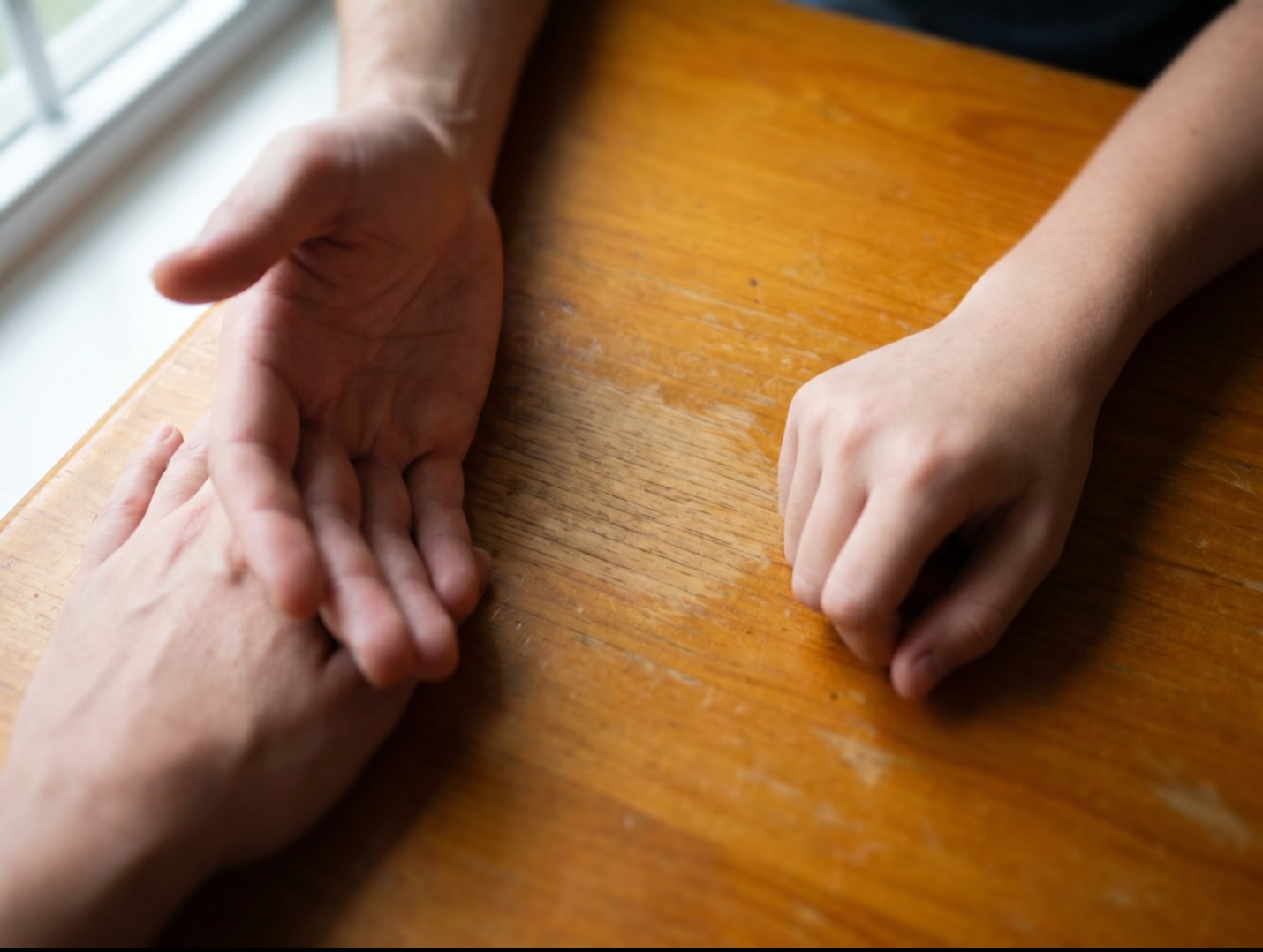
Why fewer overdose deaths doesn't mean fewer people who need real care
Overdose deaths fell in 2024, and that matters. What those numbers don't capture is the full scope of who still needs treatment—and how complex that need often is.
Most people seeking help for opioid use disorder or fentanyl addiction are dealing with more than one thing at once. Depression, anxiety, post-traumatic stress, and bipolar disorder often show up alongside substance use. When the mental health side goes untreated, the road back gets a lot harder. People tend to need care again before they've had a real chance to stabilize (Ramadan et al., 2022). And when depression, trauma, or anxiety go unaddressed, finishing a residential program becomes harder—and staying steady after leaving becomes harder still (Yule et al., 2024).
The fentanyl crisis is one part of what brought someone to this moment. But the depression that made using feel like the only way to breathe, the trauma that never got addressed, the anxiety that kept them awake long before substances entered the picture—those don't respond to a naloxone kit. They need clinical attention, time, and the kind of care that integrates substance abuse and mental health treatment into one plan, built around one person.
The geographic picture adds another layer. Several states—especially in the West—are still seeing street drug deaths climb, even as the national number drops (NPR, 2026). The illicit drug supply isn't safer. Overdose deaths involving fentanyl continue to account for the majority of fatalities, and in many areas, xylazine—a powerful veterinary sedative now found mixed into the drug supply—has made overdoses harder to reverse with naloxone alone. The overdose crisis hasn't ended. It has shifted shape. Federal funding cuts could wipe out years of hard-won progress—and the people who study this for a living are saying so plainly (University of Pennsylvania Leonard Davis Institute, 2026). The communities carrying the heaviest weight are often the ones with the fewest options—including Black and Native communities that have faced barrier after barrier to treatment access for decades. Young people using drugs face the same gap. The programs built to reach them need funding, staff, and systems that are all under pressure right now.
A year-over-year decline in overdose deaths is not a guarantee of next year's numbers. Progress, in this space, has always required active protection.
We're here to help you understand your options. Reach out to our team at Wish Recovery—your conversation is completely confidential.
Is this actually the right time to get help — or just the right time to feel hopeful?
Both. And neither one cancels the other out.
Hope is not the same as permission to wait. The news that drug overdose deaths are falling can do something tricky to the people who love someone in active use—it can create just enough relief to delay the call they've been building the courage to make. If things are getting better overall, maybe they'll get better on their own. Maybe this isn't the emergency it felt like last month. Maybe waiting a little longer is the compassionate choice.
Research on who actually finishes residential treatment keeps coming back to the same thing: how someone feels when they walk in matters enormously. Their sense of readiness. How stressed they are. Whether they feel supported the moment they step through the door (Tisdale et al., 2023). The right time to reach out isn't a national trend line. It's found somewhere between "I can't keep doing this" and "I don't know what comes next."
Stigma shapes the timing too, and it delays the call by months or years. For doctors, lawyers, executives, and first responders, the fear is different. Your reputation isn't separate from your identity—it's woven into it. Asking for help can feel like something you simply can't afford to do (Yu et al., 2022). What will colleagues think? What does stepping away say about you? That fear is real. And it keeps people waiting long past the point when part of them already knows something has to change.
At Wish Recovery, we've built the Professionals Program specifically to hold that reality with care. Working adults can maintain confidentiality completely, engage in treatment without stepping away from professional responsibilities, and move through recovery alongside others who understand the specific pressure of protecting a career while healing a life. For many people, knowing that option exists is what finally makes the call feel possible.
Wherever you or your loved one is in the process of deciding—not ready, almost ready, or quietly certain—this is a space where you won't be rushed, judged, or pushed toward a decision before you've had a moment to breathe.

What changes when the people guiding your care actually have room to see you
The public treatment system is doing meaningful work with limited capacity. But capacity is the word that matters. Funding pressures and staffing constraints in standard addiction treatment settings affect how much time a clinician has for any individual person, how personalized a care plan can realistically be, and how deeply a provider can engage with the specific combination of experiences, mental health history, and life circumstances that brought someone to this moment (Drug Policy Alliance, 2026). Access to quality treatment still varies widely depending on where someone lives and what resources they can reach (National Conference of State Legislatures, 2026). The Department of Health and Human Services and the Substance Abuse and Mental Health Services Administration have both outlined what it takes to reduce overdose deaths and prevent overdoses from happening in the first place—and one of the clearest answers is individualized, whole-person care for people who use drugs, not just crisis response after the fact.
Research on what actually helps someone complete residential treatment points toward one consistent factor: individualization. When a treatment plan is tailored to the person—rather than following a standardized track—outcomes improve (Tisdale et al., 2023). That finding might sound obvious, but in practice, real individualization requires time, clinical bandwidth, and a setting where the ratio of staff to clients makes that depth of attention possible.
We care for no more than 12 clients at a time. That number is intentional. It means every person who comes to us gets a treatment plan built around their specific history, not a protocol built around a general diagnosis. It means our clinical team has actual room to notice when something shifts—when a therapy session opens a door that needed opening, or when a difficult week requires a conversation that goes beyond the scheduled hour.
Our approach draws on therapies like cognitive behavioral therapy (CBT), which helps people understand the connection between their thoughts and behavior; dialectical behavior therapy (DBT), which builds skills for managing intense emotions; and EMDR, a trauma-focused approach that helps the nervous system process painful experiences that talking alone sometimes can't reach. These aren't buzzwords. They're tools, and they work differently for different people—which is exactly why they're applied within individualized plans rather than delivered uniformly. The health and safety of each person we work with guides every clinical decision we make.
Beyond therapy, our estate offers private suites, gourmet meals, and wellness practices like yoga, acupuncture, and sound therapy. Not as amenities for their own sake, but because healing happens in the body as much as the mind, and an environment that feels safe and restorative makes the work of treatment more possible. Detox at Wish Recovery is medically supervised around the clock, with 24/7 clinical support and IV-assisted options when appropriate—because the physical process of withdrawal deserves the same level of care as everything that comes after.
We also don't disappear when residential treatment ends. Our continuum of care extends from detox through outpatient support and aftercare planning, so the momentum of treatment doesn't break the moment someone walks out our door. A whole-person health approach—one that treats mind, body, and the circumstances of someone's life together—is what makes lasting recovery possible for the people we're privileged to work with.
Take the next step. Our team can walk you through your options and help verify your insurance coverage.
You don't need a headline to tell you it's time
Progress is real. It's worth honoring. And the people who are still afraid tonight aren't wrong to be afraid—because the decline in overdose deaths is a floor, not a finish line. Whatever brought you here, whether you're looking for yourself or someone you love, that search is its own kind of courage. We see it for exactly what it is.
Reach out to Wish Recovery today. Every conversation is confidential, and our team is available around the clock.
Frequently asked questions
Are overdose deaths actually going down in 2026?
Yes—and the scale of the drop is real. Overdose deaths fell more between 2023 and 2024 than in any single year on record. In Los Angeles County, fentanyl deaths dropped 37% in that same window. Wider naloxone access, medication-based treatment, and harm reduction efforts all helped make that happen. But the rate of progress is already slowing, and researchers are worried that funding cuts could undo what took years to build.
Does a declining overdose rate mean someone is less likely to relapse?
No. Population-level overdose death rates and individual relapse risk are two different things. Relapse risk is shaped by the presence of co-occurring mental health conditions, the quality and continuity of someone's treatment, their support system, and how thoroughly the underlying drivers of substance use have been addressed. A national trend line doesn't touch any of those factors. Someone in active opioid use disorder or in early recovery needs individualized care regardless of what the headline says.
What's the difference between standard rehab and a luxury or dual-diagnosis program?
Standard treatment programs deliver evidence-based care, but capacity and staffing constraints can limit how personalized that care actually is. A dual-diagnosis program—like the one at Wish Recovery—treats substance use and co-occurring mental health conditions together, as one integrated plan, rather than addressing them separately or sequentially. A luxury setting takes that clinical depth and places it inside an environment designed to support healing at every level: private, low-distraction, highly staffed, and structured around the individual rather than a standardized protocol.
References
Centers for Disease Control and Prevention. (2026). U.S. overdose deaths continue to decline. National Center for Health Statistics, Vital Statistics Rapid Release. https://www.cdc.gov/nchs/nvss/vsrr/drug-overdose-data.htm
Drug Policy Alliance. (2026). Fact sheet: What's reducing overdose deaths? Public health interventions play a critical role. https://drugpolicy.org/resource/fact-sheet-health-harm-reduction-approaches-pivotal-to-decrease-in-national-drug-overdose-deaths/
Los Angeles County Department of Public Health. (2025, June 25). Public health reports most significant decline in drug-related overdose deaths in LA County history [Press release]. https://lacounty.gov/2025/06/25/public-health-reports-most-significant-decline-in-drug-related-overdose-deaths-in-la-county-history/
McCurry, M. K., Avery-Desmarais, S., & Schuler, M. (2022). Perceived stigma, barriers, and facilitators experienced by members of the opioid use disorder community when seeking healthcare. Journal of Nursing Scholarship, 55(3), 701–710. https://doi.org/10.1111/jnu.12837
National Conference of State Legislatures. (2026). Drug overdose deaths fall even as new threats emerge. https://www.ncsl.org/state-legislatures-news/details/drug-overdose-deaths-fall-even-as-new-threats-emerge
NPR. (2026, May 27). U.S. street drug deaths keep dropping, but some Western states see deadly overdose surge. https://www.npr.org/2026/05/27/nx-s1-5836300/u-s-street-drug-deaths-keep-dropping-but-some-western-states-see-deadly-overdose-surge
Ramadan, M., Alharbi, A., Ahmad, R. G., et al. (2022). Evaluation of substance use disorder readmission and length of hospital stay in a major rehabilitation center in the Gulf States. International Journal of Mental Health and Addiction, 22(3), 1145–1160. https://doi.org/10.1007/s11469-022-00920-z
STAT News. (2026, March 9). America must not learn to live with tens of thousands of overdose deaths a year. https://www.statnews.com/2026/03/09/drug-overdose-deaths-opioids-decline-plateau/
Tisdale, C., Leung, J., & de Andrade, D. (2023). What client demographic, substance use, mental health, treatment, and psychological variables predict residential treatment completion for substance use disorders? International Journal of Mental Health and Addiction, 23(1), 49–69. https://doi.org/10.1007/s11469-022-01002-w
University of Pennsylvania Leonard Davis Institute. (2026). Experts warn addiction policy is weak despite falling overdose deaths. https://ldi.upenn.edu/our-work/research-updates/experts-warn-addiction-policy-is-weak-despite-falling-overdose-deaths/
Yu, Y., Matlin, S. L., & Crusto, C. A. (2022). Double stigma and help-seeking barriers among Blacks with a behavioral health disorder. Psychiatric Rehabilitation Journal, 45(2), 183–191. https://doi.org/10.1037/prj0000507
Yule, A. M., Mail, V., Butler, R., et al. (2024). Medication treatment for youth in substance use disorder residential treatment. Journal of Attention Disorders, 28(5), 791–799. https://doi.org/10.1177/10870547231218948



 June 25, 2026

